Industrial sites are built to last, which is exactly why asbestos still shows up in older mechanical rooms, pipe chases, boiler systems, fireproofing and wall assemblies. If your facility is planning maintenance, upgrades, tenant improvements, decommissioning, or demolition, industrial asbestos removal needs to be handled with strict controls, clear documentation, and a schedule that respects operations.
Synchron Demolition provides licensed asbestos removal and abatement services across Vancouver, North Vancouver, West Vancouver, Burnaby, and surrounding areas, with a safety first approach aligned with WorkSafeBC requirements and established site protocols.
Industrial Sites We Support
Industrial asbestos work is rarely one size fits all. Projects often involve active operations, restricted access zones, permits, and tight shutdown windows. Typical facility types include:
- Manufacturing plants and production facilities
- Warehouses and distribution centres
- Utility buildings and power related sites
- Food processing and cold storage facilities
- Mechanical plants and large equipment rooms
- Shipyards and marine environments
- Older commercial buildings with industrial use, including workshops and service bays
Where Asbestos Commonly Hides in Industrial Facilities
Asbestos containing materials were used for heat resistance, fire protection, durability and sound control. In industrial settings, it is often tied to mechanical systems and high heat areas.
Mechanical and process systems
Pipe insulation and fittings
Boiler lagging and breeching insulation
Gaskets, rope packing, valve and flange materials
Equipment insulation around turbines, pumps, compressors, and heat exchangers
Building structure and fireproofing
Sprayed fireproofing on steel and structural elements
Cement board and legacy wall systems
Expansion joints and fire rated assemblies
Roofing components and siding materials
Electrical and high temperature components
Older heat resistant panels and liners
Cable related materials in legacy areas
Fire doors and associated fire rated materials
Flooring and interior finishes
Vinyl floor tile and mastic
Older ceiling textures and compound materials
Coatings and adhesives in renovations
If a material is suspected, the safest move is always verification through testing before disturbance.
Industrial Asbestos Removal Services
Synchron Demolition supports industrial clients with end to end abatement services, from identification to final clearance and documentation.
Asbestos testing and surveys
- Targeted sampling plans for suspected materials
- Lab confirmed results to support planning and compliance
- Clear scope recommendations based on material type, location, and condition
Containment and removal
- Controlled work areas with appropriate isolation
- Negative air containment where required
- Wet methods and HEPA filtration practices to reduce fibre release
- Regulated removal of asbestos containing materials, followed by detailed cleaning
Encapsulation or enclosure options
In some cases, removal is not the best immediate path due to operational constraints or long term planning. Encapsulation or enclosure may be used as an interim control strategy when appropriate, with a plan for ongoing management.
Industrial demolition coordination
When abatement is connected to decommissioning or demolition, sequencing matters. Proper coordination helps prevent cross contamination, reduces downtime, and keeps the project compliant from the first cut to the final load out.

Safety and Compliance on Industrial Projects
Industrial abatement is only fast when it is planned properly. The real measure of quality is whether the project controls risk, protects people, and leaves a clean, documented outcome.
Safety on site typically includes:
Trained personnel and supervised work practices
Proper PPE selection and exposure controls
Wet methods and HEPA filtration approaches where required
Controlled access, decontamination flow, and clear communication with site leadership
For facilities that require it, third party verification and reporting can be incorporated into the project plan to support internal compliance requirements.
Minimizing Downtime in Active Facilities
Industrial clients often need asbestos removal done without turning the entire building into a no go zone. Downtime control is built through planning.
Common strategies include:
Phased containment zones to keep unaffected areas operational
Off shift scheduling for high impact work
Tight coordination with mechanical, electrical, and general contractors
Clean transitions between work zones to reduce disruption
The result should feel predictable. No surprises. No last minute shutdown extensions.
Waste Handling and Disposal
Industrial projects can generate significant volumes of regulated waste. Proper handling protects your site, reduces contamination risk, and supports compliance.
Waste handling typically includes:
Secure packaging and labelling
Clean staging and controlled loading practices
Proper transport and disposal documentation as part of the close out package
This is one of the areas where shortcuts create headaches later, especially during audits, property transfers, or insurance documentation requests.
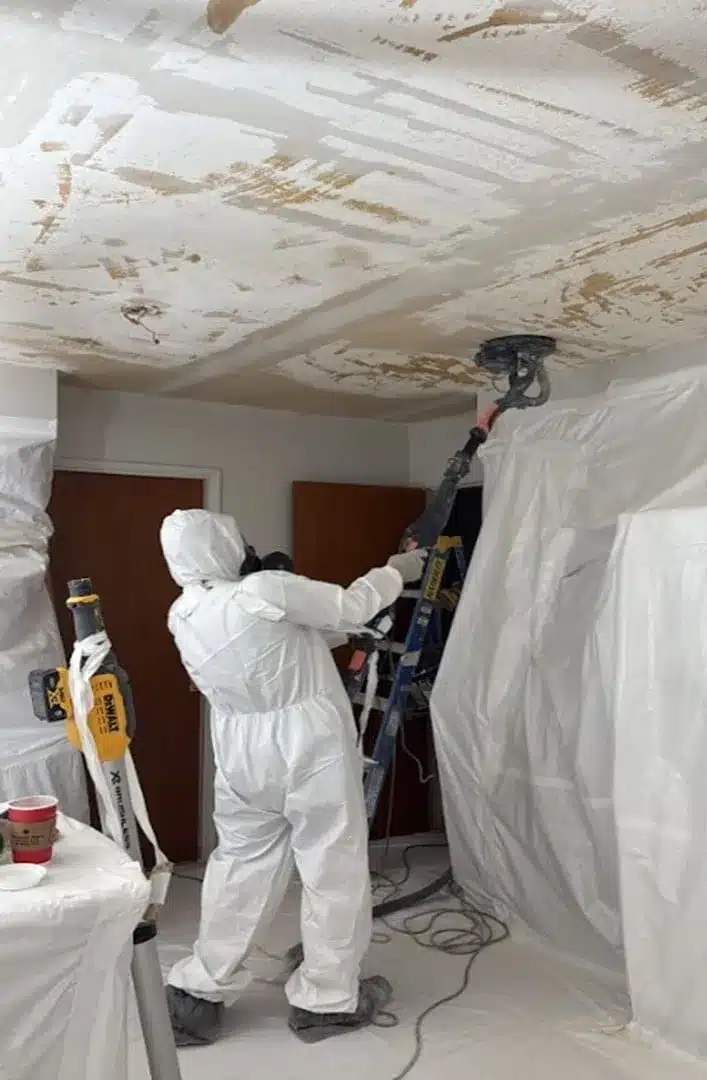
Our Asbestos Drywall Removal Process
This is what a controlled drywall abatement job looks like when it is done properly.
1. Site walk through and scope definition
A practical review of access, operational constraints, suspect materials, and project objectives. This is where shutdown windows, staging areas, and trade coordination are mapped early.
2. Testing and confirmation
Sampling is planned around the project scope so results actually support the next step. Materials are identified and categorized for the appropriate method and controls.
3. Work plan and scheduling
Industrial sites run on permits, safety meetings, and clear lines of responsibility. The work plan aligns abatement steps with site requirements so crews and operations stay in sync.
4. Setup and containment
Containment is built to suit the risk level and site layout. Access control, signage, decontamination flow, and air control systems are implemented where required.
5. Removal and cleaning
Removal is performed using controlled methods appropriate to the material, location, and condition. Cleaning is thorough and systematic, with attention to transitions and adjacent spaces.
Get a Free Quote
We’ll provide a detailed estimate with transparent costs so you know exactly what to expect. No hidden fees, just straightforward pricing.
What Impacts the Cost of Industrial Asbestos Removal
Industrial pricing is shaped by risk level, complexity, and operational constraints. Key factors include:
Material type and condition. Friable materials generally require higher controls
Access and site constraints. Height, confined spaces, restricted areas, active equipment
Containment scale. Size of work zone and air control requirements
Schedule constraints. Shutdown windows, night work, accelerated timelines
Testing, monitoring, and clearance requirements. Project specific verification needs
Accurate pricing starts with a site assessment and clear scope, especially when multiple systems are involved.
Why Facilities Choose Synchron Demolition
Industrial abatement demands consistency. Your team needs a contractor that shows up prepared, communicates clearly, and finishes with a clean handover. Synchron Demolition is known for:
Safety first planning and controlled work practices
Clear scope definition and transparent documentation
Coordination that respects plant operations and schedules
Responsive communication with a supervisor on site




Areas We Serve
We proudly serve these locations:
If you don’t see your area, give us a call. We’ll do our best to help you.