Old insulation can look harmless until it is disturbed. If your attic, crawl space, walls, or mechanical room contains asbestos insulation, even small renovation work can release fibres into the air. Synchron Demolition provides safe, WorkSafeBC compliant asbestos insulation removal across Vancouver and North Vancouver, with clear steps, clean containment, and proper disposal.
Need to renovate, sell, or simply breathe easier? Book an assessment and get a free quote.
Why asbestos insulation is higher risk than most building materials
Insulation is one of the most common places asbestos shows up in older buildings, and it is also one of the easiest materials to disturb by accident. Many insulation products are friable, meaning they can crumble and release fibres when touched, moved, cut, or vacuumed.
What makes insulation “friable”
Friable materials can break apart easily. That is why pulling, bagging, or even stepping near suspect insulation in an attic can create airborne dust that travels through the home.
Where we commonly find asbestos insulation
Older homes, mid century renovations, and “quick upgrades” often leave asbestos behind. We frequently see suspect insulation in:
- Attics and knee walls
- Crawl spaces and rim joists
- Basement ceiling cavities and utility chases
- Around ductwork, plenums, and older HVAC penetrations
- Mechanical rooms near boilers, furnaces, or older piping
Signs you may be dealing with asbestos insulation
Colour and texture are not a reliable test. Still, homeowners often notice a few patterns that raise red flags.
Renovation triggers that often expose insulation
If you are planning any of the following, you should pause and confirm what is in the building first:
- Pot lights, bath fans, range hood venting
- Electrical rewiring, panel upgrades, new wiring runs
- Heat pump or furnace upgrades that involve opening ceilings or chases
- Attic air sealing, top ups, or ventilation work
- Basement suite work where ceilings and bulkheads get opened
The “yellow and pink insulation” question
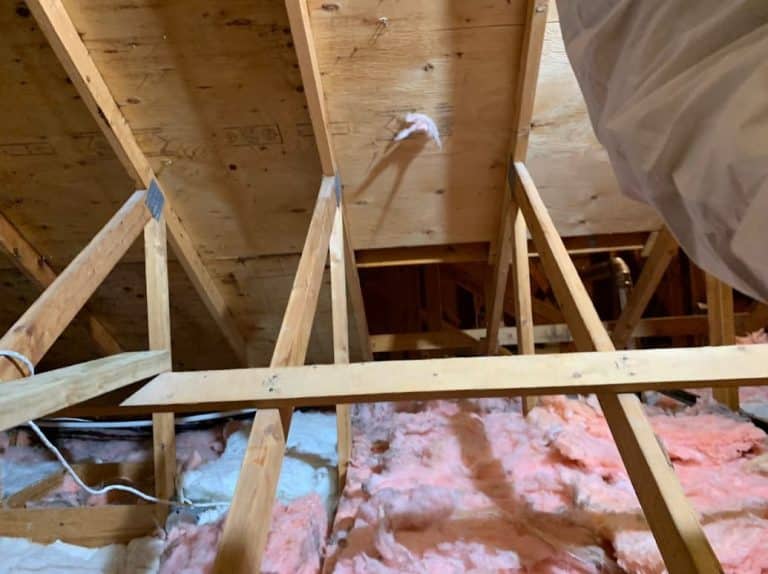
Homeowners regularly ask about asbestos insulation yellow and pink. In many cases, yellow or pink insulation is fiberglass, which is not asbestos. The problem is that older assemblies can also include asbestos in nearby materials, in older wraps, in duct insulation, or in debris mixed into the space. The only way to confirm is proper sampling and lab analysis.
What types of asbestos insulation we remove
Every job starts with a plan that matches the risk level, access, and the way your home is built.
Common asbestos insulation materials we handle
We remove and dispose of asbestos containing insulation found in:
- Loose fill attic insulation and contaminated debris
- Vermiculite style loose fill insulation
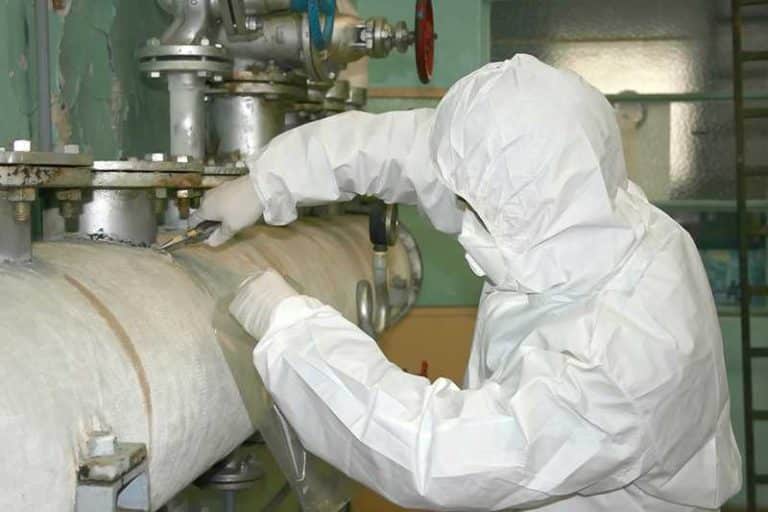
- Insulation around ducts, plenums, and mechanical penetrations
- Wraps and blankets on older piping and ductwork
- Mixed insulation layers in older attics and crawl spaces
We also help homeowners who are worried about asbestos insulation yellow and pink. If it is suspect or mixed with older materials, we can test, scope the removal, and complete the work safely.
Our Asbestos Insulation Removal Process
This is what removal looks like when it is done properly, with control at every step.
Assessment, scope, and testing when needed
We start by reviewing the area, the material type, and the level of disturbance. If asbestos testing is required, we can coordinate sampling and lab analysis. For many Vancouver and North Vancouver projects, testing is the smartest first step before any demolition or renovation begins.
Containment and negative air setup
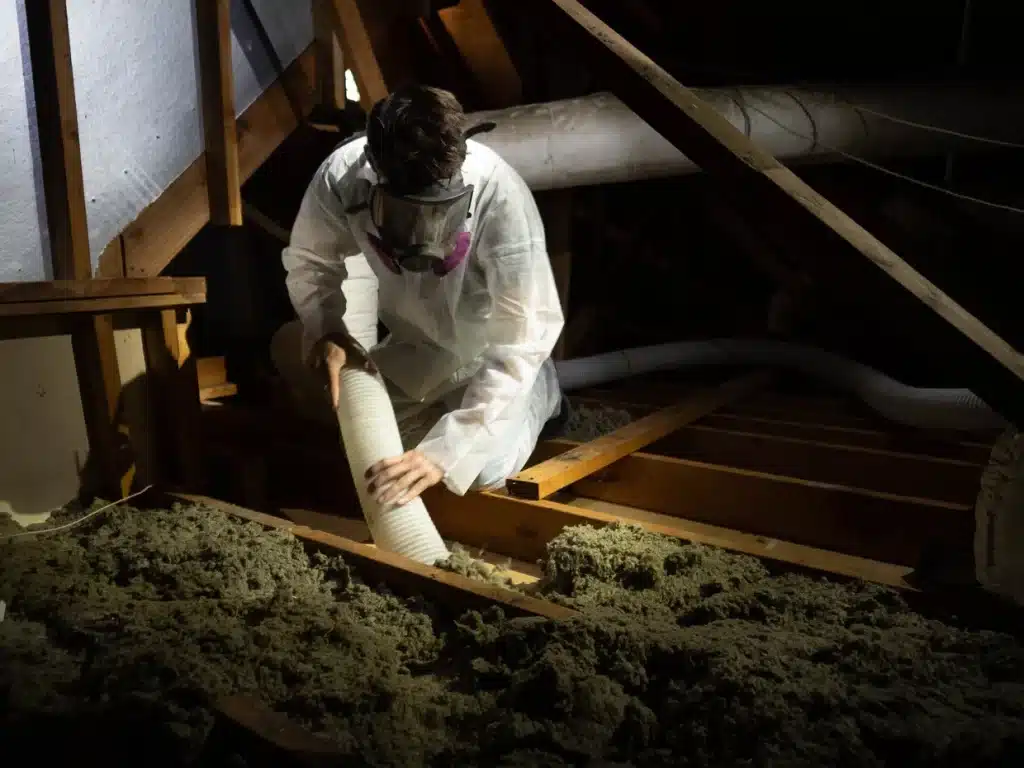
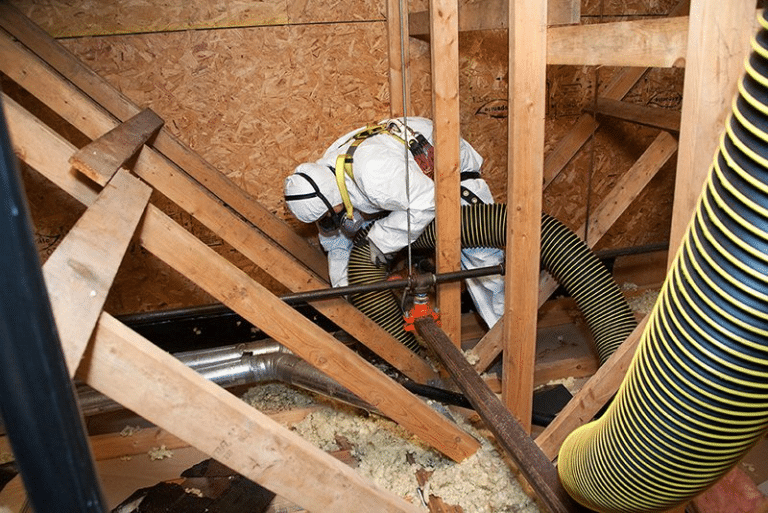
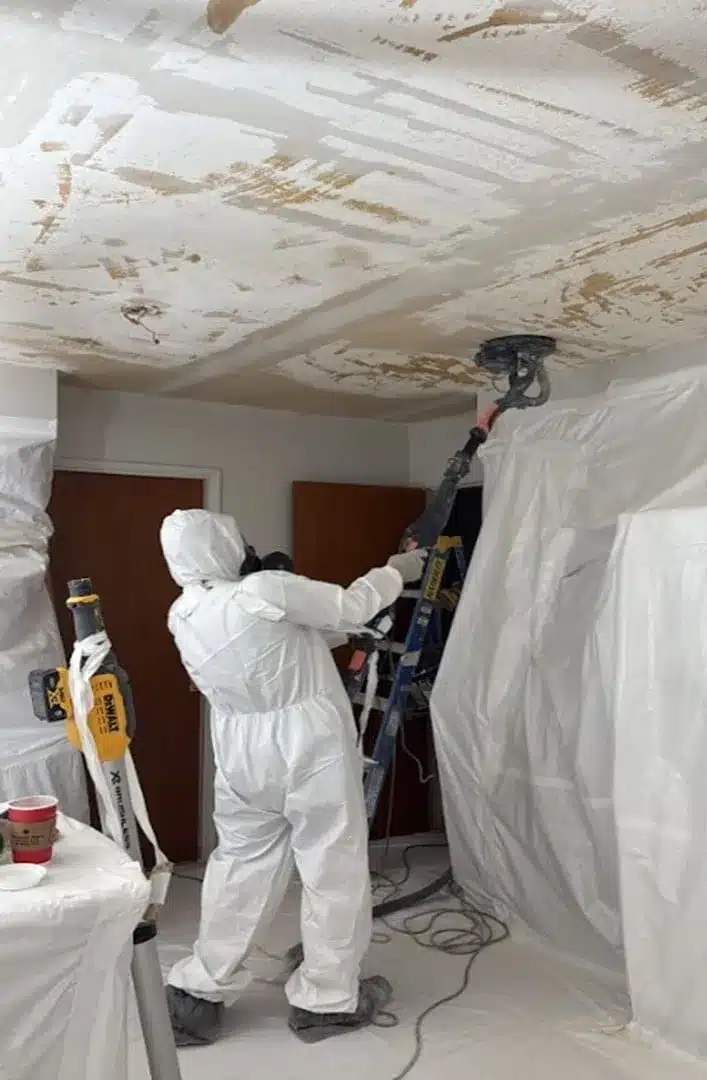
We build containment to keep fibres from spreading to clean areas of the home. That may include sealed poly barriers, controlled entry, and negative air units with HEPA filtration.
Safe removal using wet methods and HEPA controls
We remove asbestos insulation carefully to reduce dust and fibre release. Work methods depend on the insulation type and site conditions, but the goal stays the same: controlled removal with clean air practices.
Bagging, transport, and approved disposal
Asbestos waste must be packaged and handled correctly. We seal and label materials, then transport them for disposal through approved hazardous waste pathways.
Detailed cleanup and final checks
After removal, we perform HEPA cleanup and a final review of the work area so you can move forward with renovations or occupancy with confidence.
Get a Free Quote
We’ll provide a detailed estimate with transparent costs so you know exactly what to expect. No hidden fees, just straightforward pricing.
Why choose Synchron Demolition for asbestos insulation removal
You are not just hiring a crew. You are hiring a safety system.
Local experience and disciplined site control
We have over 10 years of experience working across Vancouver, North Vancouver, and surrounding areas. That matters because local homes have predictable pain points like tight crawl spaces, low attics, mixed renovation layers, and shared walls in multi unit buildings.
WorkSafeBC compliance and trained leadership
Asbestos work in BC requires strict safety practices. Our team follows WorkSafeBC requirements for asbestos abatement, containment, and disposal. If you want to verify licensing details, we can provide our asbestos abatement licence information and you can also confirm contractor status through WorkSafeBC’s public registry.
We handle more than insulation
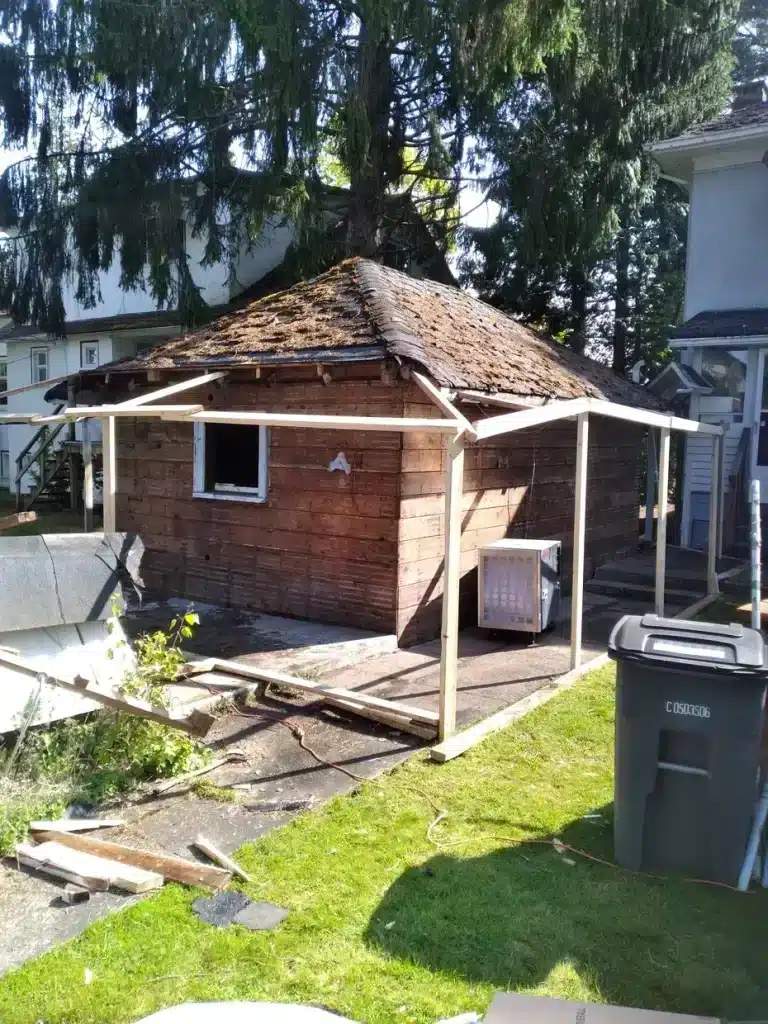
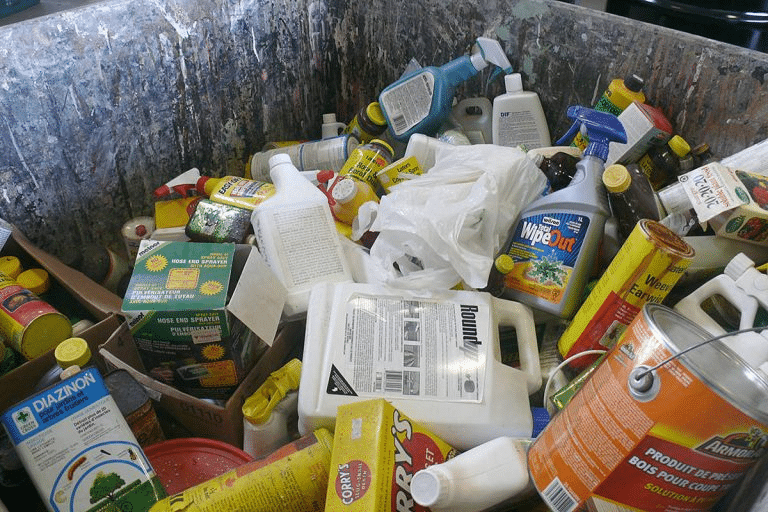
Asbestos rarely shows up alone. If your project involves multiple hazardous materials or demolition, we can coordinate the work so you do not have multiple contractors stepping over each other.
Related services you may need:
Areas We Serve
We proudly serve these locations:
If you don’t see your area, give us a call. We’ll do our best to help you.