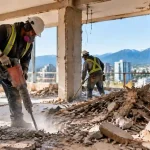
When we tear down old structures, safety is always our top priority. One of the most significant hidden dangers in buildings constructed before the 1980s is asbestos. To truly understand why professional demolition and asbestos removal require such strict safety protocols, we must look at the exact mechanisms of asbestos-related disease development.
In this post, we will break down this complex topic using a clear, structured approach, examining the distinct categories of how asbestos physically harms the body, where the exposure happens on a job site, and the mechanisms we implement to prevent it.
[Source Of This Blog: https://www.torrossa.com/en/resources/an/5958035]
The Biological Mechanisms: How Asbestos Attacks the Body
To understand the danger, we must look at what happens when asbestos fibers enter the human body. The development of deadly diseases like asbestosis, lung cancer, and mesothelioma occurs through three main, non-overlapping physiological mechanisms:
-
Physical Damage: Asbestos fibers have a unique, microscopic, needle-like structure. When inhaled, these sharp fibers bypass the body’s natural airway filters and penetrate deep into lung tissue.
Example for clarity: Imagine inhaling microscopic shards of indestructible glass. Because the body cannot naturally break these mineral fibers down, they cause direct, permanent physical damage to the delicate air sacs in the lungs.
-
Oxidative Stress: Once lodged inside the body, asbestos fibers generate reactive oxygen species (ROS). These are unstable molecules that damage critical cellular components, including proteins, lipids, and DNA.
Example for clarity: Think of oxidative stress like cellular “rusting.” Just as oxygen and water cause metal to rust and degrade over time, ROS damage the DNA of healthy cells, which acts as a primary catalyst for cancerous mutations.
-
Chronic Inflammation: The human immune system is designed to attack foreign invaders. When asbestos fibers penetrate the lungs, the body’s defense mechanism tries to engulf and destroy them using specialized cells called macrophages. Because the fibers are highly resistant, the immune system remains in a permanent state of attack, triggering the continuous release of pro-inflammatory cytokines and growth factors.
Example for clarity: It is like a scab that is constantly picked at and never allowed to heal. Over decades, this relentless internal inflammation leads to severe scarring (fibrosis) and creates the perfect environment for tumors to develop.
The Occupational Mechanisms: How Exposure Happens in Demolition
Having understood the internal biological mechanisms, we must categorize the external mechanisms—how workers and the public actually come into contact with these deadly fibers. The construction and demolition industry is one of the highest-risk sectors, representing a massive portion of occupational exposure globally. Exposure pathways fall into three distinct sources:
-
Primary Sources: This involves the direct handling of raw asbestos fibers, typically seen in historic asbestos mining or the manufacturing of asbestos goods. While less common today, it represents the historic root of the global asbestos crisis.
-
Secondary Sources (The Demolition Danger): This is the most critical area for our industry. Secondary exposure occurs when workers disturb Asbestos-Containing Materials (ACMs) during renovation, maintenance, or demolition activities.
Example for clarity: Tearing down a wall that contains old asbestos insulation, cutting through contaminated roofing shingles, or breaking up vintage floor tiles releases invisible clouds of toxic dust. Even the simple act of cleaning equipment contaminated with this dust triggers dangerous secondary exposure.
-
Environmental Sources: Exposure can also happen passively. Working inside older buildings where asbestos materials are actively deteriorating, or living near contaminated demolition sites, can result in inhaling airborne fibers without ever touching the materials directly.
The scale of these exposure mechanisms is massive; globally, an estimated 125 million people are exposed to asbestos in the workplace, leading to over 107,000 deaths annually.
The Preventive Mechanisms: Breaking the Chain of Disease
At Synchron Demolition, understanding how the disease develops is what drives our rigorous safety standards. To prevent the biological mechanisms from ever starting, we implement a comprehensive, multi-layered system of protective mechanisms to stop exposure:
-
Engineering Controls: We stop the fibers at the source before they can become airborne. This includes utilizing “wet methods,” which means heavily applying water or wetting agents to asbestos-containing materials before and during cutting or tearing them down.
Example for clarity: Just as spraying water on dry dirt prevents a dust storm when you sweep, wetting asbestos prevents the microscopic needles from floating into the air. We also use Local Exhaust Ventilation (LEV) systems with specialized HEPA filters to capture any stray fibers.
-
Administrative Controls: We tightly control how work is executed. This involves restricting site access only to authorized, highly trained personnel and conducting thorough risk assessments and building inspections before a single sledgehammer is swung.
-
Personal Protective Equipment (PPE): When engineering controls are not enough, specialized PPE acts as the final barrier. Our teams use advanced respiratory protection, such as Powered Air-Purifying Respirators (PAPRs), and wear full-body disposable protective clothing to ensure no fibers are inhaled or carried home to their families.
Conclusion
The mechanisms of asbestos-related diseases are silent and relentless. Once those needle-like fibers enter the body, the physical damage, oxidative stress, and chronic inflammation can progress unnoticed for decades before a severe disease appears.
That is exactly why professional, strictly controlled demolition is non-negotiable. At Synchron Demolition, we take pride in understanding these risks from the microscopic biological level to the practical job-site level. By adhering to the highest safety standards, we ensure that every structure we bring down is dismantled safely, protecting our workers, our clients, and the surrounding environment from the hidden dangers of asbestos.