If you’ve heard of vermiculite, you might know it as a versatile material used in gardening or home insulation. But what you may not realize is that some vermiculite products contain asbestos, a hazardous substance linked to serious health risks. Understanding this connection is crucial for homeowners, renovators, and anyone working with vermiculite. Let’s break down what you need to know about vermiculite and asbestos.
Vermiculite asbestos is a real risk in BC attics: if your home was built before 1990, the loose insulation above your ceiling could contain asbestos, and the safest first step is professional testing — not a closer look. Synchron Demolition provides licensed asbestos removal across the Lower Mainland, starting with sampling, lab testing and a hazmat survey before any work begins.
What Is Vermiculite?
Vermiculite is a naturally occurring mineral that expands when heated, making it lightweight and fire-resistant. These properties have made it a popular choice for insulation, as well as a soil conditioner in gardening. It’s mined in several parts of the world, and its uses span everything from construction to industrial applications.
However, because vermiculite is often extracted from the earth alongside other minerals, there’s a chance for contamination with asbestos, a dangerous fibrous mineral.
Why Does Vermiculite Sometimes Contain Asbestos?
The link between vermiculite and asbestos primarily comes from historical mining practices. A significant portion of the vermiculite used in the United States came from Libby, Montana, where the ore was heavily contaminated with asbestos.
For decades, asbestos-tainted vermiculite from Libby was sold for insulation under the brand name Zonolite. At the time, awareness of asbestos’ health risks was limited. Today, regulations have improved, but vermiculite insulation in older homes may still pose a risk.
Because Zonolite was sold across North America for decades, vermiculite insulation in a pre-1990 BC home should be treated as suspect until a licensed professional tests it — there is no way to tell by looking whether a particular batch came from the Libby mine.
How to Identify Vermiculite Insulation That May Contain Asbestos
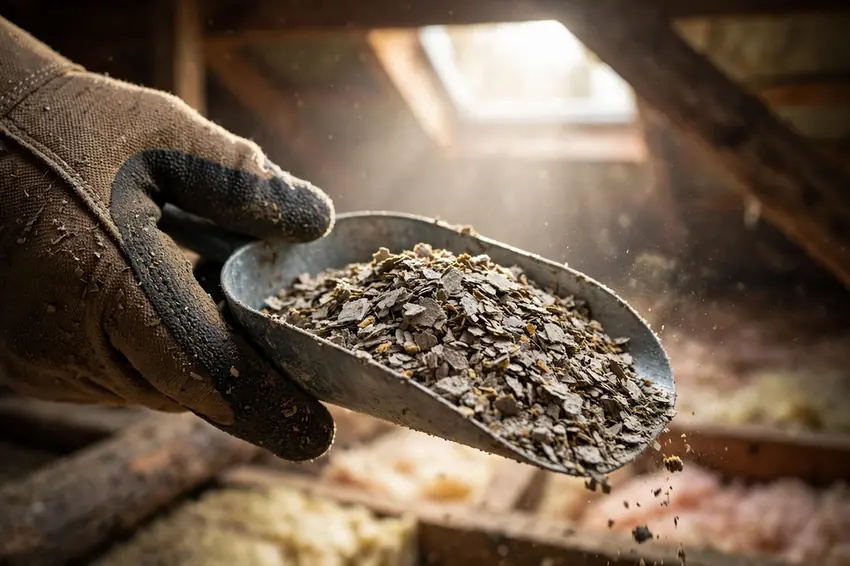
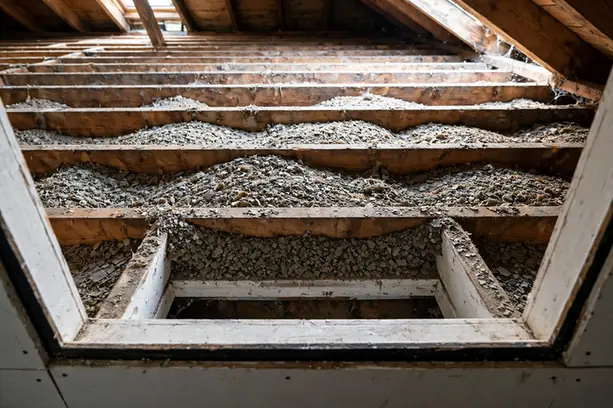
Vermiculite insulation is typically gray-brown or silver-gold in color and has a pebble-like appearance. If your home was built or insulated before the 1990s, there’s a chance that it contains asbestos-contaminated vermiculite.
Keep in mind, visual identification is not enough to confirm the presence of asbestos. Testing by a certified professional is the only reliable method. Until you know for sure, it’s best to treat any vermiculite insulation with caution.
Vermiculite’s loose granules look very different from fibreglass batts, but other materials can look similar too — our guide to what asbestos looks like shows how hard visual identification can be, and why only lab testing gives a definite answer.
Health Risks of Asbestos-Contaminated Vermiculite
Asbestos exposure is a serious health hazard. Inhaling asbestos fibers can lead to chronic lung conditions such as asbestosis, lung cancer, and mesothelioma—a rare and aggressive cancer. The risks are higher for those who disturb asbestos-containing materials, such as during renovations or demolition.
Even brief exposure can be harmful, so it’s essential to take precautions if you suspect asbestos in your home.
Vermiculite is not the only hidden asbestos risk in an older home — asbestos in linoleum flooring is another material that often goes unnoticed until a renovation disturbs it.
What to Do If You Suspect Vermiculite Insulation Contains Asbestos
If you believe your insulation contains asbestos-contaminated vermiculite, follow these steps:
- Avoid Disturbing the Insulation: Do not attempt to move, remove, or clean the insulation yourself. Disturbing it can release asbestos fibers into the air.
- Get an assessment: 95% of vermiculite that has been used in the attic is assumed to contain asbestos. You can contact us for a free assessment, and if you insist on getting it tested, we provide a testing service to analyze samples from your insulation. They’ll confirm whether asbestos is present.
- Hire Professionals for Removal: If asbestos is detected, work with licensed asbestos abatement specialists. They have the tools and training to safely remove and dispose of contaminated materials.
- Follow Legal Guidelines: Local regulations often require specific procedures for licensed asbestos removal and disposal. Be sure to comply with these to ensure safety and avoid legal issues.
Attic access: stay out and keep the hatch sealed
Never enter an attic with exposed vermiculite without professional advice. Walking on the insulation, moving stored items or even opening the hatch can disturb it and release fibres into the home. Keep the attic hatch closed and sealed, do not store items in an attic with exposed vermiculite, and never sweep or vacuum the insulation. If work is needed in the attic, arrange testing first and let a licensed contractor plan safe access.
Before any renovation that disturbs the attic or ceilings, get a hazmat survey first. What removal costs depends on the size and accessibility of the attic, the amount of insulation, and whether clearance testing is included — our guide to asbestos removal cost in Vancouver explains the factors that shape a quote. Testing comes first, and the only reliable figure is a written quote after a site visit.
Vermiculite — what to do and what never to do
| Situation | Do | Don’t |
|---|---|---|
| You spot pebble-like insulation | Arrange professional testing | Don’t touch, sweep or vacuum it |
| Planning a renovation | Get a hazmat survey first | Don’t open the attic or cut ceilings |
| Insulation looks disturbed | Leave the area, call a licensed pro | Don’t use a household vacuum |
| Selling the home | Disclose it and provide test results | Don’t hide it from buyers |
| Storing items in the attic | Keep the hatch closed, store elsewhere | Don’t walk or store things on exposed vermiculite |
Stay Safe with Vermiculite
Vermiculite can be a useful material, but it’s essential to be aware of its potential asbestos risks. If your home has older insulation, take precautions, get it tested, and seek professional help if needed. By staying informed and proactive, you can ensure your living space remains safe and healthy for everyone.
Trust Synchron Demolition for Safe Asbestos Handling
If you suspect that your home’s vermiculite insulation contains asbestos, Synchron Demolition is here to help. Our licensed professionals specialize in asbestos testing, vermiculite removal, and safe disposal to ensure your safety and peace of mind. Don’t take risks with your health—contact Synchron Demolition today for a consultation and take the first step toward a safer, asbestos-free home.
Frequently Asked Questions About Vermiculite and Asbestos
Does all vermiculite insulation contain asbestos?
No. Not all vermiculite contains asbestos, but vermiculite mined in Libby, Montana — sold under the brand name Zonolite — often does, and it was widely used in North American homes. Because there is no way to tell by looking, any vermiculite insulation in a pre-1990 home should be tested by a licensed professional before it is disturbed.
How can I tell if my attic insulation is vermiculite?
Vermiculite looks like small, loose, grey-brown pebbles or granules, sometimes with a shiny, accordion-like texture. It is usually poured loosely between attic joists. If your home was built before 1990 and the attic contains this material, treat it as suspect. Do not touch or move it — arrange professional testing first.
Is it safe to live in a home with vermiculite insulation?
Yes, as long as the insulation is undisturbed and sealed in the attic. Vermiculite only becomes a risk when it is disturbed and fibres are released into the air. Keep the attic hatch closed, never sweep or vacuum the insulation, and do not store items in an attic with exposed vermiculite. Have it tested before any renovation.
Can I remove vermiculite insulation myself in BC?
No. Vermiculite that may contain asbestos must be handled by a licensed asbestos abatement contractor under WorkSafeBC rules. Removing it yourself can release fibres throughout the home and lead to stop-work orders or fines. A licensed team uses containment, proper protective equipment and approved disposal, and provides clearance documentation afterwards.
How much does vermiculite removal cost in Vancouver?
It depends on the size and accessibility of the attic, the amount of insulation, and whether clearance testing is included. Testing comes first, and the quote follows the test results. Because costs vary widely between homes, the only reliable figure is a written quote after a site visit — be wary of any flat price given without seeing the attic.
Sources
- Health Canada — federal guidance on vermiculite insulation and asbestos.
- WorkSafeBC — BC rules on vermiculite handling and abatement licensing.
- US EPA — EPA guidance on vermiculite insulation, including the Libby mine history.
- CCOHS — Canadian guidance on vermiculite and asbestos exposure.
- Government of BC — BC homeowner guidance on asbestos in attics.