

If you live in Vancouver and you are planning a renovation, it is completely normal to wonder what asbestos looks like in your home. You might be staring at old tiles, a popcorn ceiling, or some fluffy insulation and asking yourself, “Is that asbestos?”
The short answer is that asbestos can look like many ordinary building materials. In most cases you cannot confirm asbestos just by looking at it. Only a lab test can say for sure. Still, there are useful visual clues that can tell you when to be cautious and when to call a professional.
In this guide, we will walk through what asbestos often looks like, where it is commonly found in Vancouver homes, and what to do if you suspect a problem. Throughout the article, remember one key safety rule: if you think a material might contain asbestos, do not disturb it. Contact a licensed asbestos removal company near you such as Synchron Demolition for testing and safe removal instead.
Why You Cannot Reliably Identify Asbestos By Sight
Asbestos is not one single product. It is a group of naturally occurring minerals that form tiny, durable fibres. When manufacturers used asbestos, they usually mixed those fibres into other materials such as cement, plaster, vinyl, or insulation. The fibres are microscopic, so you cannot see them individually with the naked eye once they are inside a product.
Two big problems come from this:
- Asbestos products look very similar to non‑asbestos products. A vinyl tile with asbestos and a vinyl tile without asbestos can look almost identical. The same is true for siding, joint compound, insulation, and other materials.
- The most dangerous fibres are invisible. When asbestos is damaged or disturbed, it releases tiny fibres into the air. You cannot see or smell them, but you can breathe them deep into your lungs.
Because of this, visual clues are only a screening tool. They can tell you when to be cautious, but they can never replace proper sample testing at an accredited lab.
What Asbestos Fibres Look Like Under the Microscope
The image at the top of this page shows six common asbestos types: chrysotile, amosite, crocidolite, tremolite, actinolite, and anthophyllite. You will notice a few things about them:
- Chrysotile looks like white or greenish fibres that curl and twist. It is sometimes called “white asbestos” and is the most widely used type worldwide.
- Amosite has straight, stiff fibres that are brown or tan. This is often called “brown asbestos.”
- Crocidolite appears as fine, straight blue fibres running through rock. It is sometimes called “blue asbestos” and is considered especially hazardous.
- Tremolite, actinolite, and anthophyllite all show pale, needle‑like fibres that form in bundles.
These microscopic views help scientists and lab technicians classify asbestos under specialised microscopes. For a homeowner in Vancouver, the important takeaway is this: even if the raw mineral has a certain colour or fibre shape under magnification, those features are usually hidden once asbestos is blended into a product. This is why professional testing is so important.
Quick Visual Overview: How Asbestos Often Appears In Homes
Even though you cannot see the fibres themselves, many asbestos‑containing products share some common looks and locations. This section gives you a quick snapshot before we go into more detail.
- Fluffy loose‑fill or sprayed insulation in attics and around beams
- White, off‑white, or grey wrapping around pipes and boilers
- Older vinyl floor tiles and black, tar‑like adhesives
- Rigid cement boards or shingles on the exterior of the house
- Popcorn ceilings and older textured plasters on walls and ceilings
If your Vancouver home was built or renovated during the decades when asbestos was widely used, and you see materials like these, it is wise to be cautious.
Insulation: Loose‑Fill, Sprayed Coatings, and Pipe Wrap
Insulation is one of the most common places asbestos shows up in older Vancouver homes, especially in attics and around mechanical equipment.

Loose‑Fill and Sprayed Asbestos Insulation
In attics or wall cavities, asbestos insulation can appear as a fluffy, greyish or off‑white material. Sprayed‑on asbestos may look like someone coated beams or ceiling areas with a rough, cotton‑candy texture. In some older commercial buildings around Greater Vancouver, sprayed asbestos was used on structural steel for fireproofing.
Because loose insulation often gets mixed with other materials over time, it is nearly impossible to identify asbestos here by sight. If you are planning to top up your attic insulation or you find strange loose material during a renovation, stop work and arrange for testing.
Pipe, Boiler, and Duct Insulation
In many older basements and mechanical rooms, asbestos was used as a white or off‑white plaster‑like wrap on hot water pipes, boilers, and fittings. You might see:
- Thick, chalky coatings shaped around elbows and joints
- Cloth or cardboard‑like sleeves around straight sections of pipe
- Old ductwork wrapped in a grey or white blanket material
These materials can become dusty and brittle with age. Any crumbling, cracked, or damaged insulation around piping in an older Vancouver home is a strong reason to call Synchron Demolition for a professional opinion.
Floors: Tiles, Sheet Vinyl, and Adhesives
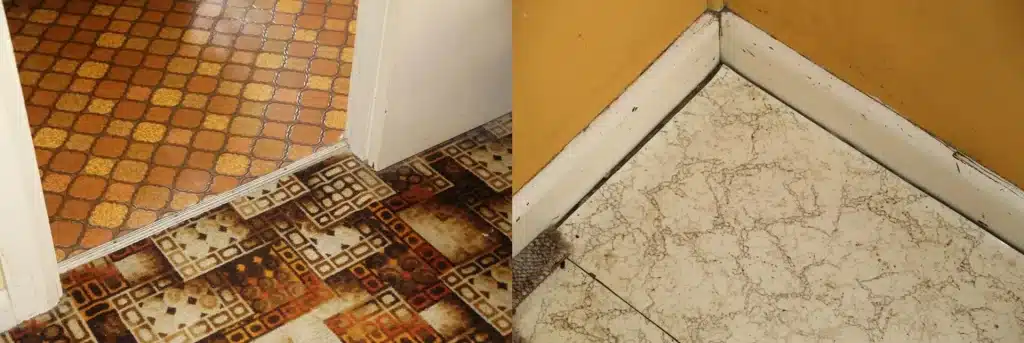
Old flooring is another big red flag, particularly in basements, kitchens, and high‑traffic areas that have never been fully updated.
Asbestos Floor Tiles and Sheet Flooring
One of the most common questions we hear is about old floor tiles. Asbestos‑containing floor tiles were produced in sizes such as 9×9, 12×12, and 18×18 inches. They often have mottled or speckled patterns in browns, greys, or muted colours. Many Vancouver basements, laundry rooms, and kitchens still have these tiles in place.
Asbestos was also used in some sheet vinyl flooring. The surface might look like fake stone, brick, or another pattern. The asbestos is usually in the backing material, not in the visible top layer.
Black “Cutback” Adhesive
Even if the tiles themselves do not contain asbestos, the black, tar‑like adhesive that holds them down sometimes does. This adhesive is known as cutback. When you remove old flooring and see a black, sticky or brittle glue underneath, do not start scraping it up without testing.
If you are upgrading floors in an older Vancouver home or condo, have suspicious tiles and adhesives tested before sanding, grinding, or demolition begins.
Exterior: Cement Siding, Roofing, and Soffits
Asbestos was not only used indoors; many Vancouver houses still carry asbestos on the outside in older cement products.
Cement Siding and Shingles
Asbestos cement siding looks and feels like very hard, thin cement board. It may be installed as narrow shingles or as larger flat panels. You might notice:
- Straight, crisp edges that snap rather than bend
- A grey, off‑white, or painted surface
- Light wood‑grain or shingle patterns pressed into the face
Many character homes and older houses in East Vancouver, North Vancouver, and Burnaby still have this type of siding under newer layers.
Roofing and Soffit Panels
Some older roofs used asbestos cement shingles or flat sheets. These are rigid and brittle compared to modern asphalt shingles. Asbestos soffit boards can appear as flat white or cream panels under the roof overhang.
Exterior asbestos materials are often considered lower risk while they remain intact. Problems arise when you cut, grind, or break them, which can release fibres into the air. This is another situation where a licensed asbestos removal company like Synchron Demolition should handle the work.
Interior Finishes: Textured Ceilings, Plaster, and Joint Compound
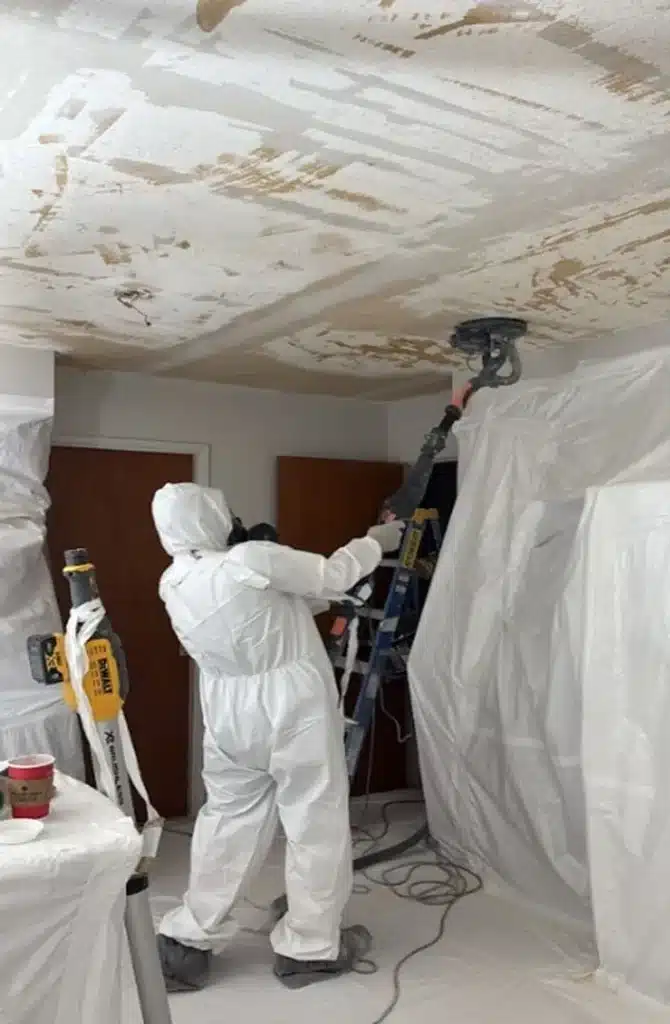
Asbestos can also hide in the finishes you see every day, like your ceilings and smooth painted walls.
Popcorn and Textured Ceilings
Many Vancouver homes built or renovated before asbestos restrictions have popcorn or stippled ceilings. These coatings can contain asbestos, especially if they were applied decades ago. They usually look like a bumpy, sprayed texture that hides imperfections.
Sanding, scraping, or removing this texture without testing is very risky because it can create a large amount of airborne dust.
Plaster and Joint Compounds
Asbestos was also used in some plasters and joint compounds. These may look like ordinary smooth walls and ceilings. The asbestos is hidden inside the material, which makes visual identification nearly impossible.
Any major wall or ceiling renovation in an older home, such as cutting new openings or skim‑coating ceilings, should start with an asbestos survey.
Where Asbestos Was Commonly Used In Vancouver Homes
Asbestos use peaked during the mid‑20th century. In the Greater Vancouver area, many homes built or renovated from roughly the 1940s through the late 1980s may contain asbestos in one form or another.
Typical locations include:
- Attics and walls: loose‑fill insulation, vermiculite, and some blown‑in products
- Basements and utility rooms: pipe wrap, boiler insulation, floor tiles, and duct wrap
- Kitchens and bathrooms: vinyl floor tiles, sheet flooring, cement boards, and some mastics
- Living areas: textured ceilings and certain plasters or joint compounds
- Exteriors: cement siding, roofing shingles, and soffit boards
If your home falls within these construction years or you know there were renovations during that time, treat suspect materials with caution.
[Read More: Asbestos-Containing Materials]
Asbestos vs Look‑Alike Materials
Modern building materials often copy the look of older products without using asbestos. For example:
- New fibre cement siding looks similar to old asbestos siding
- Modern vinyl tiles echo the patterns of older tiles that might have contained asbestos
- Fibreglass and mineral wool insulation can resemble some asbestos insulation
This overlap is exactly why it is so easy to be fooled by appearance. A modern renovation material from a recent project may be perfectly safe, while an older product that looks almost identical may contain asbestos.
If you recently bought your Vancouver home and are unsure about its renovation history, an asbestos inspection before major work is a smart investment.
What To Do If Something Looks Like Asbestos
If you suspect that a material in your home might contain asbestos, here is a safe approach:
- Stop disturbing it. Do not drill, sand, scrape, or cut the material.
- Avoid cleaning up dust aggressively. Sweeping and regular vacuuming can spread fibres. If there is visible dust, keep the area off‑limits and wait for professional advice.
- Limit access. Keep children, pets, and unnecessary traffic away from the area.
- Arrange for professional testing. A trained asbestos professional can take small, controlled samples and send them to a certified lab.
Never try to pull your own samples if it means cutting, breaking, or crumbling the material. The short‑term cost savings are not worth the potential health risk.
When To Call Synchron Demolition For Asbestos Testing And Removal In Vancouver
Whenever you are unsure, it helps to have an expert on your side. Synchron Demolition provides asbestos testing, abatement, and safe disposal for homes and businesses across Vancouver and the North Shore.
You should contact us if:
- You are planning a renovation in an older home or commercial space
- You have damaged insulation, tiles, siding, or popcorn ceilings
- You notice suspicious materials after a water leak or fire
- A home inspection or previous owner mentioned possible asbestos
Our team can:
- Inspect your property and identify materials that are likely to contain asbestos
- Take proper samples and coordinate certified lab testing
- Prepare a clear report so you know what is safe and what needs removal
- Set up containment, negative‑pressure systems, and safe work procedures
- Remove and dispose of asbestos in line with all British Columbia regulations
By using a licensed company, you protect yourself, your family, and your neighbours from unnecessary exposure.
Key Takeaways: How To Think About What Asbestos Looks Like
- Asbestos itself is a group of minerals with fibrous structures, like the chrysotile, amosite, and crocidolite shown in the image at the top of this page.
- Once mixed into building products, asbestos usually looks like ordinary tile, plaster, insulation, siding, or roofing.
- Visual clues can help you decide when to be cautious, but only a laboratory test can confirm whether asbestos is present.
- If you live in Vancouver and are planning renovation work in an older property, treating suspicious materials carefully and arranging testing is the safest approach.
- For professional asbestos testing, removal, and complete site clean‑up in Vancouver, Synchron Demolition is ready to help.
When in doubt, do not guess. Leave the material alone, call an expert, and let proper testing tell you what you are dealing with.


