Asbestos was once widely used in construction and manufacturing because it is strong and heat-resistant. But when people learned it could cause cancer, finding and removing asbestos became a major health concern. While most people associate asbestos with building materials, it was also used in many other products. That’s why in this guide, we cover all the places where you might find asbestos so you can stay informed and protected.
Asbestos Rules in BC: WorkSafeBC and the BC Occupational Health and Safety Regulation
In British Columbia, the rules are different from the US rules described in the Regulations section below. Under the BC Occupational Health and Safety Regulation, a hazardous materials survey must be completed before any work that disturbs building materials in a home built before 1990, so you know what is present before anything is cut, drilled or removed. Since January 2024, asbestos abatement work in BC must be carried out by a licensed abatement contractor — always ask for the WorkSafeBC licence number and verify it before hiring anyone. At Synchron Demolition, we provide professional asbestos removal by a licensed team across Metro Vancouver.
Comprehensive List of Asbestos-Containing Materials
Below is a table listing common asbestos-containing materials, along with their uses and estimated asbestos content. In the following sections, you will find additional details and explanations about each material category.
| Material | Common Uses | Estimated Asbestos Content (%) |
|---|---|---|
| Insulation | Pipes, boilers, ducts | 10-85% |
| Ceiling Tiles & Textured Coatings | Homes, offices, commercial buildings | 1-10% |
| Roofing Materials | Shingles, asphalt roofing, felts | 5-15% |
| Floor Tiles & Adhesives | Vinyl tiles, linoleum backing, mastics | 2-25% |
| Cement Sheets & Panels | Walls, roofing, exterior cladding | 10-50% |
| Drywall & Joint Compounds | Wall finishes, construction projects | 2-5% |
| Fireproofing Sprays & Coatings | Structural beams, ceilings | 30-90% |
| Gaskets & Sealants | Machinery, boilers, piping systems | 70-90% |
| Fireproof Blankets & Curtains | Industrial settings | 20-60% |
| Electrical Insulation | Arc shields, older wiring systems | 40-95% |
| HVAC Duct Insulation | Heating and cooling systems | 10-80% |
| Laboratory Equipment | Fume hood panels, work surfaces | 20-80% |
| Brake Pads & Linings | Older vehicles | 30-60% |
| Clutch Facings & Gaskets | Cars, trucks, heavy machinery | 40-80% |
| Engine Heat Shields | Protection from extreme temperatures | 20-50% |
| Aircraft & Ship Insulation | Engine compartments, structural components | 40-90% |
| Older Home Appliances | Toasters, hairdryers, irons | 5-25% |
| Gloves & Ironing Board Covers | Heat-resistant textiles | 10-50% |
| Fireproof Textiles | Fire-resistant clothing, blankets | 20-60% |
| Boiler & Engine Room Insulation | Protects against heat in confined spaces | 50-90% |
| Cement-Reinforced Structures | Ship walls, decks | 20-60% |
10 common asbestos-containing materials at a glance
The table below summarises the materials most often found in BC homes, with their typical asbestos content and the typical risk if they are disturbed. The risk ratings are general guidance, not laboratory test results — only testing of a sample can confirm whether a particular material contains asbestos.
| Material / location | Years commonly used | Typical asbestos content | Risk when disturbed |
|---|---|---|---|
| Vermiculite attic insulation | 1920s–1980s | May contain tremolite asbestos | High |
| Popcorn / stipple ceilings | 1950s–1980s | Chrysotile in the texture coat | High |
| Vinyl floor tiles and sheet flooring | 1950s–1980s | Chrysotile in tiles and adhesive | Medium–High |
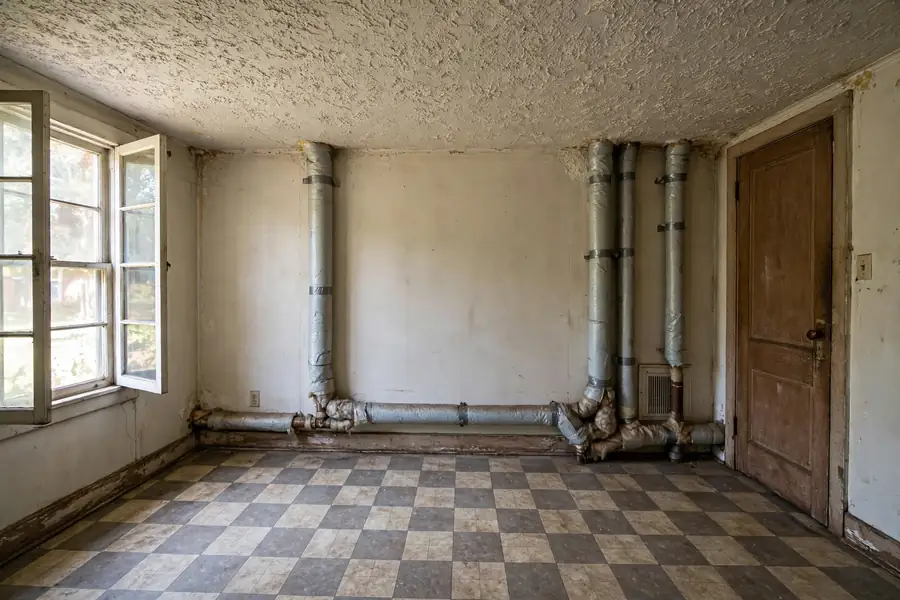
| Pipe and duct insulation | 1920s–1970s | Chrysotile / amosite wrap | High |
| Drywall joint compound | 1950s–1980s | Chrysotile | Medium |
| Fibre-cement siding and roofing | 1940s–1980s | Chrysotile in cement | Medium |
Attic vermiculite insulation deserves special attention in BC homes: loose, pebble-like insulation in a pre-1990 attic should be treated as suspect until it has been tested by a licensed professional.
Building and Construction Materials
- Insulation: Used to prevent heat loss in pipes, boilers, and ducts. It often contains a high percentage of asbestos.
- Ceiling Tiles & Textured Coatings: Commonly found in older homes, these materials may release asbestos fibers if disturbed.
- Roofing Materials: Asbestos was added to shingles and felts for durability and fire resistance.
- Floor Tiles & Adhesives: Vinyl tiles and adhesives often contain asbestos, particularly in buildings constructed before the 1980s.
- Cement Sheets & Panels: Frequently used in external cladding, roofing, and walls.
- Drywall & Joint Compounds: Older drywall mud and joint tape may contain asbestos.
- Fireproofing Sprays & Coatings: Used to protect structural elements from fire damage.
Industrial and Commercial Applications

- Gaskets & Sealants: Found in high-temperature machinery and piping.
- Fireproof Blankets & Curtains: Used in industrial and fire protection settings.
- Electrical Insulation: Common in old wiring systems and arc shields.
- HVAC Duct Insulation: Insulation for heating and cooling systems.
- Laboratory Equipment: Found in fume hood panels and work surfaces.
Automotive and Transportation

- Brake Pads & Linings: Used in vehicles for friction resistance.
- Clutch Facings & Gaskets: Common in older cars and heavy machinery.
- Engine Heat Shields: Protects engine components from heat exposure.
- Aircraft & Ship Insulation: Found in various structural and mechanical parts.
Household and Consumer Products
- Older Home Appliances: Certain older models of toasters, hairdryers, and irons contain asbestos.
- Gloves & Ironing Board Covers: Heat-resistant textiles for personal protection.
- Fireproof Textiles: Used in fire-resistant clothing and blankets.
Marine and Shipbuilding Materials
- Boiler & Engine Room Insulation: Provides heat resistance in confined spaces.
- Cement-Reinforced Structures: Strengthens ship walls and decks.
Risks of Exposure to Asbestos-Containing Materials
If asbestos materials are damaged or disturbed, tiny fibers are released into the air. When inhaled, these fibers can embed in the lungs and cause severe health conditions, including asbestosis, lung cancer, and mesothelioma. These diseases often take decades to develop, making early exposure especially dangerous. Even minimal exposure can accumulate over time, leading to serious long-term health risks. Proper precautions, including professional assessment and protective measures, are essential when dealing with asbestos-containing materials.
Regulations for Asbestos-Containing Materials
Governments have strict regulations on asbestos handling. In the U.S., OSHA and the EPA set safety standards. Many countries have banned asbestos use, but older buildings and products may still contain it. If you suspect asbestos in your home or workplace, consult a professional before disturbing it.
Identifying and Testing ACMs
You cannot identify asbestos by sight alone. A professional inspection or lab testing is required. Testing methods include:
- Polarized Light Microscopy (PLM): Determines asbestos type and concentration.
- Transmission Electron Microscopy (TEM): Detects asbestos fibers at a microscopic level.
Learn how asbestos-containing material is measured in the laboratory, and see what asbestos looks like — remembering that appearance alone can never confirm or rule it out. If floor tiles are your concern, read how to test floor tiles for asbestos before disturbing them.
Most people do not have access to specialized testing methods for asbestos detection. If you need asbestos testing in Vancouver, our professional team can provide a safe and accurate assessment of your environment, ensuring you take the right steps for health and safety.
Safe Handling and Removal of ACMs
- If asbestos materials are intact, it is often safer to leave them undisturbed.
- Sealing or encapsulating asbestos prevents fiber release.
- Removal should only be done by licensed professionals following strict guidelines.
- Proper protective equipment, including respirators and disposable coveralls, is necessary.
- Asbestos waste must be disposed of at approved facilities.
We strongly recommend that if you encounter asbestos or even suspect its presence, you should seek professional assistance. At Synchron Demolition, we have over ten years of experience in asbestos testing and removal, successfully handling hundreds of cases.
We proudly provide asbestos removal services across the entire Vancouver area. Whether you’re located in the city or surrounding regions, our team is ready to help. To get started, simply select your location from the options below and fill out the relevant form:
The Future of Asbestos-Free Alternatives
Many industries now use safer alternatives like fiberglass, mineral wool, and cellulose insulation. Public awareness and strict regulations continue to reduce asbestos risks. If you own or work in an older building, staying informed about asbestos safety is crucial for your health and compliance.
Stay safe. Stay informed. Always consult a professional before dealing with asbestos materials.
Test Before You Disturb Anything
If your home was built before 1990, test first — before you cut, drill, sand or demolish anything. Book asbestos testing with a licensed team, and read what asbestos looks like so you know which materials to treat as suspect until the lab results come back.
Frequently Asked Questions
What are the most common asbestos-containing materials in BC homes?
The most common are vermiculite attic insulation, popcorn or stipple ceilings, vinyl floor tiles and sheet flooring, pipe and duct insulation, drywall joint compound, and fibre-cement siding and roofing. All were widely used in homes built before 1990. If your home is from that era, a hazardous materials survey is the reliable way to find out what is present.
Can you identify asbestos-containing materials by looking at them?
No. Asbestos fibres are microscopic, so appearance alone can never confirm or rule them out. Age and material type are useful clues — for example, 9×9-inch vinyl tiles or vermiculite insulation in a pre-1990 home — but look-alike products are common. Only laboratory testing of a sample taken by a licensed professional gives a definite answer.
Were asbestos-containing materials used in homes built after 1990?
Rarely. Asbestos use in building materials fell sharply after the 1980s, and Canada banned asbestos in 2018. Homes built after 1990 are very unlikely to contain asbestos, though imported products are a small exception. The real concern is homes built before 1990, especially from the 1950s to the 1980s, which should be tested before renovation.
What should I do if I find a material that might contain asbestos?
Leave it alone. Do not cut, sand, drill, sweep or vacuum it — any disturbance can release fibres. Keep people and pets away from the area, and arrange professional testing through a licensed asbestos contractor. If you are planning a renovation, get a hazardous materials survey before any work begins.
Is it safe to live in a home with asbestos-containing materials?
Yes, if the materials are intact and undisturbed — asbestos only becomes a health risk when fibres are released into the air. Many BC homes contain asbestos that is safely managed in place. The key is to monitor the materials, avoid disturbing them, and have a licensed professional assess them before any renovation or demolition.
Sources
- WorkSafeBC — BC rules on asbestos identification, testing and abatement licensing.
- Health Canada — federal guidance on asbestos in homes and the 2018 ban.
- US EPA — where asbestos can be found in homes.
- CCOHS — Canadian guidance on asbestos-containing materials and safe handling.
- BCCDC — BC public-health information on asbestos exposure.