Planning a renovation, demolition, or major repair in British Columbia often starts with a question that homeowners and property managers do not expect: what hazardous materials may be hidden inside the building? Before hiring an asbestos removal Vancouver contractor or opening walls, ceilings, flooring, or mechanical systems, you may need a hazmat report. This report identifies hazardous building materials that could be disturbed during the planned work and gives contractors the information they need to manage those materials safely.
In Metro Vancouver and the Lower Mainland, hazmat reports are especially important for older homes, commercial buildings, rental properties, and structures that have been renovated more than once. New finishes can cover older materials, so appearance alone cannot confirm that a building is free from asbestos, lead, or other hazards.
What Is a Hazmat Report?
A hazmat report is a written document prepared after a hazardous materials inspection or survey. It records which building materials were assessed, where samples were collected, what the laboratory found, and what actions are recommended before renovation, demolition, salvage, or repair work begins.
The word “hazmat” is short for hazardous materials. In building projects, a hazmat report may also be called a hazardous materials survey, hazardous building materials assessment, pre-renovation survey, or pre-demolition survey. Although people often use these terms interchangeably, the survey is the inspection and sampling process, while the report is the final written record.
A hazmat report is always connected to a defined scope. For example, a survey prepared for a bathroom renovation may cover the walls, ceiling, flooring, insulation, and fixtures in that room, but it may not cover the rest of the home. This is why the planned work must be clearly explained before the inspection starts.
Why Is a Hazmat Report Important in British Columbia?
Renovation and demolition can release hazardous dust, fibres, vapours, or debris when materials are cut, drilled, sanded, broken, or removed. A proper report helps prevent uncontrolled exposure and gives workers a clear plan before they disturb building components.
WorkSafeBC requires hazardous materials that may be affected by demolition, renovation, or salvage work to be identified by a qualified person before the work begins. The hazardous materials identification report described in section 20.112 of the Occupational Health and Safety Regulation is commonly treated as a pre-renovation or pre-demolition survey.
The report also helps owners and contractors:
- Define the correct abatement scope
- Estimate project costs more accurately
- Select properly trained and licensed contractors
- Plan containment, waste handling, and disposal
- Avoid unexpected work stoppages
- Provide required documents at the worksite
- Support municipal permit and inspection processes
A hazmat report is not simply a paperwork requirement. It is a practical risk-management tool that can reduce exposure, contamination, delays, disputes, and unplanned costs.
What Materials Can a Hazmat Report Identify?
The exact scope depends on the building, the planned work, and the consultant’s assignment. A report may address one or several of the following materials.
Asbestos-Containing Materials
Asbestos may be present in drywall joint compound, textured ceilings, vinyl flooring, floor tile, mastics, vermiculite insulation, pipe insulation, duct materials, cement products, roofing materials, and other older building components. It cannot be reliably confirmed by sight alone. Representative samples normally need laboratory analysis.
Lead-Containing Paint and Coatings
Older paint, primers, coatings, and finishes may contain lead. Disturbing these surfaces can create hazardous dust or debris, especially during sanding, grinding, torch cutting, demolition, or abrasive preparation.
Silica-Containing Materials
Concrete, mortar, masonry, tile, stone, and some construction products contain crystalline silica. Cutting, drilling, grinding, or crushing them can create respirable silica dust. A hazmat report may identify where these materials are located, although work procedures and exposure controls may be addressed separately.
PCBs, Mercury, and Other Building Hazards
Older electrical equipment, transformers, capacitors, fluorescent lamps, thermostats, switches, sealants, and industrial components may contain PCBs, mercury, or other regulated substances. Commercial and industrial buildings may also contain refrigerants, chemicals, fuel residues, or contaminated equipment.
Mould and Biological Contamination
Mould may be noted when visible growth, water damage, or suspect conditions are observed. However, mould assessment is often treated as a separate service because its investigation, sampling, and remediation planning differ from asbestos and lead surveys.
Not every hazmat inspection tests for every possible hazard. The client should confirm which materials and areas are included before approving the work.
When Do You Need a Hazmat Report?
Before Renovation Work
A hazmat survey may be needed before removing drywall, replacing flooring, renovating a kitchen or bathroom, altering plumbing or electrical systems, opening wall cavities, replacing windows, cutting concrete, or disturbing insulation. The survey should cover every material that the project may affect.
Even a small renovation can require targeted testing. Replacing a few cabinets may disturb drywall compound, flooring, backing materials, or insulation. The size of the room does not determine the risk. The materials being disturbed do.
Before Demolition or Deconstruction
A pre-demolition survey is usually broader than a limited renovation survey. It may cover the entire structure, including concealed or difficult-to-access areas. Full demolition, partial demolition, structural alterations, fire-damaged building removal, and deconstruction projects can all require detailed hazardous materials identification.
In Vancouver, demolition projects may also involve municipal hazardous building material documentation, qualified professional declarations, and post-abatement records. Requirements vary by project and municipality, so owners should check local permit requirements early.
Before Major Maintenance or Emergency Repairs
Property managers and commercial building owners may need a report before replacing mechanical systems, repairing water damage, removing damaged ceilings, upgrading electrical rooms, or completing emergency structural work. When urgent work is necessary, the hazardous materials information still needs to be addressed before workers disturb suspect materials.
When a Contractor or Municipality Requests One
General contractors, restoration companies, demolition contractors, and strata managers may ask for a current report before pricing or scheduling work. A municipality may also request hazardous building material documents as part of a permit process. Requirements can differ across Vancouver, Burnaby, Richmond, Surrey, Coquitlam, New Westminster, North Vancouver, West Vancouver, Delta, Langley, Maple Ridge, and other Lower Mainland communities.
Who Can Prepare a Hazmat Report in BC?
A hazmat report should be prepared by a qualified person with the education, training, knowledge, and experience needed to identify the hazards relevant to the project. The qualified person may review building records, inspect accessible materials, select representative samples, interpret laboratory results, estimate quantities, and provide recommendations.
The consultant, laboratory, and abatement contractor have different roles:
- The consultant or inspector conducts the survey and prepares the report.
- The laboratory analyzes submitted samples.
- The abatement contractor removes, contains, or manages identified hazardous materials.
- The renovation or demolition contractor completes the planned construction work after the required hazards have been addressed.
Since January 1, 2024, asbestos abatement contractors operating in British Columbia must hold a valid licence, and workers performing asbestos abatement must have the required training and certification. Property owners should verify the contractor’s licence before asbestos removal work begins.
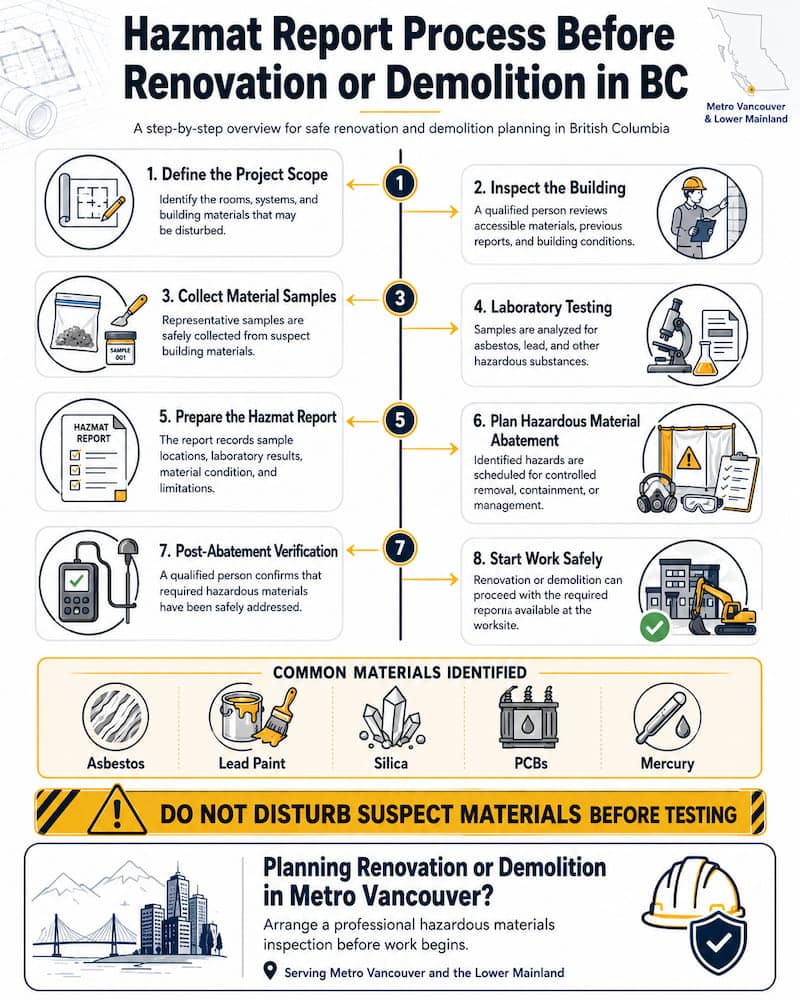
How Is a Hazmat Inspection Performed?
1. Project Scope Review
The inspector first confirms what work is planned and which areas may be disturbed. Renovation drawings, contractor scopes, photographs, building records, and previous reports may be reviewed.
2. Site Inspection
The qualified person examines accessible building materials and systems. They record material types, locations, condition, approximate quantities, and areas that cannot be accessed.
3. Representative Sampling
Where laboratory confirmation is required, the inspector collects representative samples using controlled procedures. Small openings may be needed to reach layered or concealed materials. Samples are labelled so the laboratory results can be connected to exact locations.
4. Laboratory Analysis
Samples are submitted to a qualified laboratory for the appropriate analysis. The laboratory report states whether the tested substance was detected in the submitted sample.
5. Report Preparation
The inspector combines site observations, sample locations, photographs, laboratory findings, quantities, limitations, and recommendations into the final hazmat report.
What Should a Hazmat Report Include?
A useful hazmat report should clearly describe:
- The property address and building type
- The inspection date and purpose
- The project scope
- The areas included in the survey
- Excluded or inaccessible areas
- The inspector’s information and qualifications
- Materials assessed
- Sample identification numbers
- Exact sample locations
- Laboratory results
- Photographs or marked drawings
- Material condition
- Approximate quantity or extent
- Recommended controls or abatement actions
- Report limitations
- Supporting laboratory certificates
The limitations section is especially important. A report that says no asbestos was detected in submitted samples does not necessarily prove that no asbestos exists anywhere in the building. The result applies to the sampled materials and the defined survey area.
How Do You Read Hazmat Report Results?
Positive Result
A positive result means the tested sample contains the hazardous component identified by the laboratory. The affected material must be managed according to the report, applicable regulations, and the planned work.
Negative Result
A negative result means the substance was not detected in that submitted sample using the stated test method. It does not automatically apply to visually similar materials in other rooms, different installation phases, or concealed layers that were not sampled.
Presumed Hazardous Material
Sometimes a material is treated as presumed hazardous because it could not be safely accessed, the owner declined sampling, records indicate a concern, or the inspector considers it necessary to manage the material conservatively. Presumed materials should not be disturbed until their status is resolved or they are handled as hazardous.
Material Condition and Disturbance
A material may be intact at the time of inspection but still require controls if renovation will cut, break, sand, drill, or remove it. The report should be read together with the construction scope, not as a general statement that the building is safe for every future activity.
What Happens If Hazardous Materials Are Found?
Finding asbestos, lead, or another hazard does not always mean the entire building must be stripped. The required action depends on the material, its location, its condition, and whether the planned project will disturb it.
The usual next steps are:
- Review the report with the project team.
- Stop work that could disturb the identified material.
- Define the abatement or containment scope.
- Prepare safe work procedures and required notices.
- Hire properly qualified and licensed contractors.
- Complete removal, containment, or another approved control.
- Arrange post-abatement inspection or clearance where required.
- Keep the relevant reports available for the next stage of work.
WorkSafeBC requires written confirmation from a qualified person that identified hazardous materials have been safely contained or removed before regular work that could disturb them proceeds.
Hazmat Report vs. Asbestos Test vs. Clearance Report
A hazmat report, asbestos laboratory result, and clearance report are related, but they serve different purposes.
A hazmat report identifies hazardous materials across a defined project area and explains where they are located.
An asbestos test report gives laboratory findings for specific submitted samples. By itself, it may not provide a complete survey of the work area.
An abatement work plan explains how the identified materials will be removed or controlled.
A post-abatement or clearance report documents conditions after abatement and confirms whether the required work has been completed. Depending on the project, this may include a visual inspection, air monitoring, document review, or other verification.
How Long Is a Hazmat Report Valid?
There is no simple expiry period that fits every project. A report may remain useful when the building and project scope have not changed, but it should be reviewed when:
- The renovation or demolition scope changes
- Previously inaccessible areas become accessible
- New or unexpected materials are discovered
- The building has been altered since the inspection
- The report covers only part of the property
- The municipality or contractor requests updated information
- The original report lacks enough detail for the current project
Before relying on an older report, ask the qualified person whether it still covers the exact work being planned.
How Much Does a Hazmat Report Cost in Metro Vancouver?
Pricing depends on the size and complexity of the property, the number of work areas, the materials being assessed, the number of samples, accessibility, laboratory turnaround time, and whether the survey is limited or building-wide.
A targeted bathroom survey usually requires less fieldwork and sampling than a full pre-demolition inspection of a multi-storey commercial building. Rush laboratory analysis and travel outside the main service area may also affect the final cost.
The lowest inspection price is not always the lowest project cost. An incomplete survey can lead to extra visits, delayed permits, change orders, or unexpected abatement after construction begins. Request a clear written scope that explains which areas, materials, samples, laboratory fees, and report services are included.
How Long Does the Process Take?
The total timeline includes scheduling, the site visit, laboratory analysis, and report preparation. A small residential inspection may take less time on site than a large commercial or industrial survey, but laboratory turnaround and report complexity also affect delivery.
Rush analysis may be available, but owners should avoid promising construction start dates until the required results and report are complete. For demolition or complex renovations, allow enough time for follow-up sampling, abatement planning, municipal submissions, and post-abatement documentation.
Questions to Ask Before Hiring a Hazmat Consultant
Before approving a survey, ask:
- Are you qualified to assess the materials relevant to this project?
- Does the scope cover the entire building or only the planned work area?
- Which hazardous materials are included?
- Are laboratory fees included in the quote?
- Will the report show exact sample locations and material quantities?
- Will inaccessible and excluded areas be clearly listed?
- Can the report be used by the contractor and municipality?
- What happens if additional suspect materials are discovered?
- Do you also provide post-abatement verification?
Clear answers at the beginning reduce misunderstandings later.
Local Considerations for Metro Vancouver and the Lower Mainland
Many buildings across Metro Vancouver have been renovated in stages. A home may have a modern kitchen, a 1990s basement renovation, and original wall or ceiling materials hidden behind newer finishes. Commercial units may also have several generations of flooring, ceiling systems, mechanical insulation, and tenant improvements.
Local permit requirements and waste acceptance procedures can vary. Vancouver demolition projects have specific hazardous building material documentation and abatement steps, while other municipalities may use different forms or review processes. Disposal facilities may also have packaging, transportation, appointment, and documentation requirements for asbestos waste.
Property owners in Vancouver, Burnaby, Richmond, Surrey, Coquitlam, North Vancouver, West Vancouver, New Westminster, Delta, Langley, Maple Ridge, and nearby communities should confirm municipal and disposal requirements before scheduling work.
Final Takeaway
A hazmat report identifies hazardous building materials before renovation, demolition, salvage, or major repair work disturbs them. It helps owners understand what is present, where it is located, and what must happen before regular construction proceeds.
The most useful report is one that matches the exact project scope, includes clear sample locations and limitations, and is prepared by a qualified person. When asbestos or another hazard is found, the report becomes the foundation for safe abatement, contractor planning, municipal documentation, and post-abatement confirmation.
Before opening walls, removing flooring, demolishing a structure, or starting a major renovation in Metro Vancouver or the Lower Mainland, arrange a professional hazardous materials inspection. Early testing can make the project safer, clearer, and easier to manage.
Frequently Asked Questions
Is a hazmat report required in BC?
A hazardous materials survey is required before renovation, demolition, or salvage work when hazardous materials may be disturbed. The exact scope depends on the building and the planned work. Municipal permit requirements may add further documentation.
Does a hazmat report include asbestos testing?
It often does, especially in older buildings, but the scope must be confirmed. A report may also assess lead, silica-containing materials, PCBs, mercury, and other project-specific hazards.
Can a general contractor prepare a hazmat report?
The report must be prepared by a person qualified for the hazards being assessed. A general contractor should not prepare it unless they have the required education, training, knowledge, and experience and can act independently within the applicable requirements.
Can renovation continue if asbestos is found?
Work that could disturb the asbestos should not continue until the material has been safely removed, contained, or otherwise managed and the required written confirmation is available.
Does asbestos always need to be removed?
Not necessarily from the entire building. The correct action depends on the material’s condition, location, and whether the planned project will disturb it. Materials affected by the work must be managed safely.
Can I use an old hazmat report?
Possibly, but only if it still covers the exact project scope and current building conditions. A qualified person should review it when the building, work area, or renovation plan has changed.
What is the difference between a hazmat report and a clearance report?
A hazmat report identifies hazards before work begins. A clearance or post-abatement report documents conditions after hazardous materials have been removed or contained.
How much does a hazmat report cost in Vancouver?
The cost depends on property size, survey scope, sample count, accessibility, laboratory turnaround, and report complexity. A written quote should clearly state what is included.