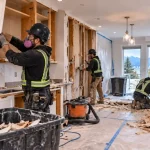
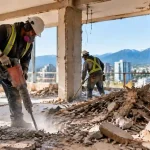
If your home or building has old floor tiles, they might contain asbestos. Asbestos was commonly used in tiles before the 1980s for durability and fire resistance. But disturbing asbestos releases harmful fibers that can cause lung diseases.
Before renovating or removing old tiles, asbestos floor tile testing is essential. This guide explains how asbestos floor tile testing works in BC, what it costs, and what your results mean.
Not sure what you are looking at? Learn what asbestos looks like in common household materials before you disturb anything.
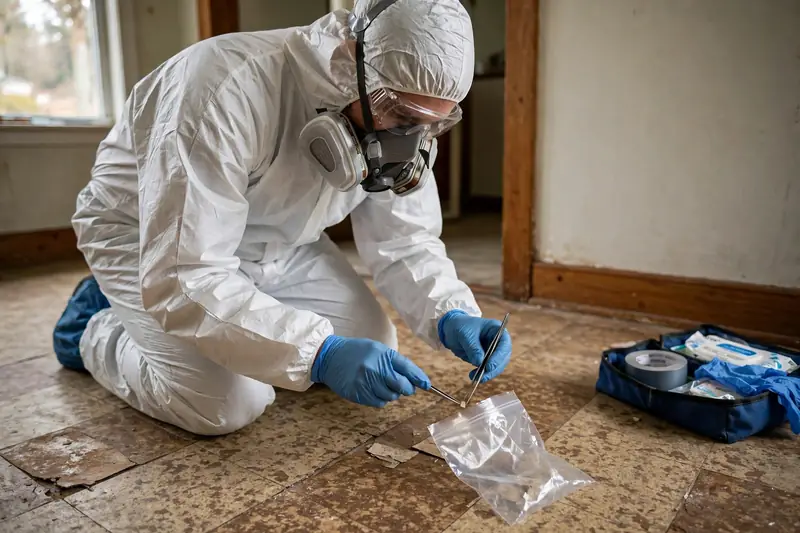
How to Identify Floor Tiles That May Contain Asbestos
- Check the Age: Tiles installed before the mid-1980s are more likely to contain asbestos.
- Look at the Size: 9×9-inch, 12×12-inch, and 18×18-inch tiles from that era often had asbestos.
- Examine the Color and Brand: Some dark-colored asphalt-based tiles and specific manufacturers are linked to asbestos.
- Check the Adhesive: Old black mastic (glue) may also contain asbestos.
- No Visible Clues? The only way to be sure is through testing.
Flooring is not the only place asbestos hides. The same caution applies to asbestos in linoleum flooring, and to the many other asbestos-containing materials found in BC homes built before 1990.
Testing Methods for Asbestos in Floor Tiles
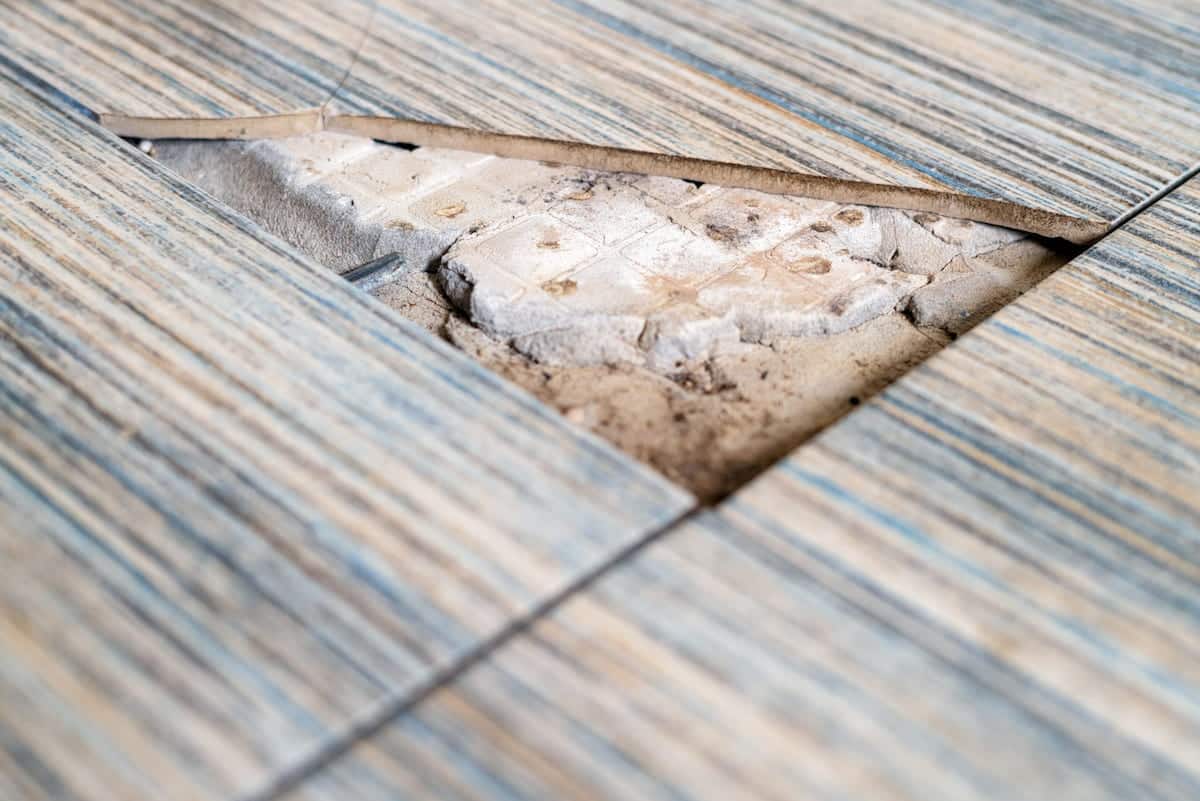
1. Professional Lab Testing (Recommended for Accuracy)
- A licensed professional collects the sample safely, using wet methods and protective equipment.
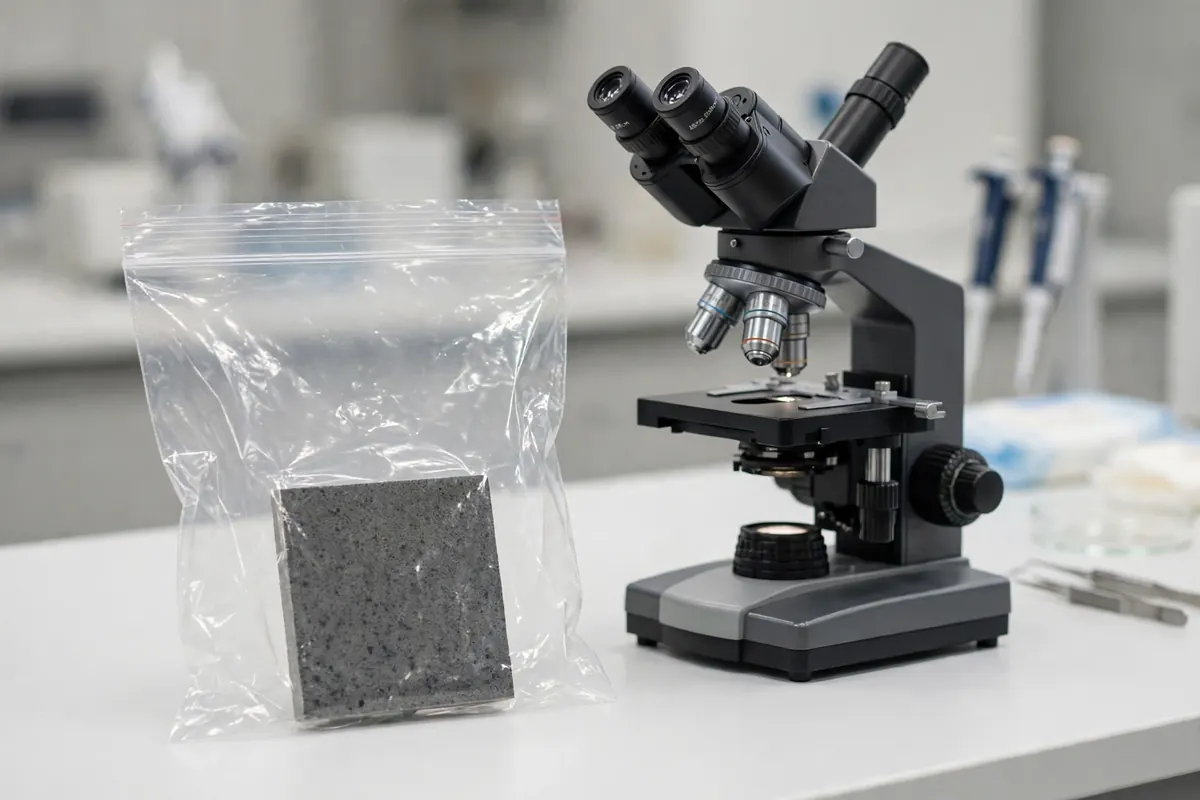
- The sample is sent to an accredited lab for analysis.
- Receive written results within a few days.
2. DIY Asbestos Test Kits (Less Reliable, More Risky)
- Available at hardware stores, but not recommended in BC.
- Collecting a sample yourself means cutting or breaking a tile, which can release asbestos fibres into your home.
- DIY sampling also risks an unreliable result, because the wrong spot or a contaminated sample can mislead the lab.
3. Hiring a Certified Asbestos Inspector
- The safest and most accurate option.
- Inspectors know where and how to take samples without spreading fibers.
- Ideal for large properties or when multiple materials need testing.
Why sampling is a job for licensed professionals
Cutting or breaking a tile to take a sample disturbs the material and can release asbestos fibres into your home. In BC, sampling must be done by a trained, licensed professional who uses proper controls and protective equipment. DIY sampling also risks an unreliable result, because the wrong spot or a contaminated sample can mislead the lab.
A licensed professional inspects the tiles, checks the age and condition of the flooring, and takes small samples using wet methods and protective equipment. The samples go to an accredited laboratory, which identifies any asbestos fibres and reports the type and percentage. You usually receive written results within a few days, along with advice on next steps.
Floor tile testing — what happens at each step
| Step | What the professional does | What the homeowner should do |
|---|---|---|
| 1. Visual inspection | Checks tile size, age and condition | Share the home’s age and renovation history |
| 2. Sampling | Safe sampling with wet methods and controls | Leave the room; do not touch the tiles |
| 3. Lab analysis | Accredited lab, PLM/TEM methods | Wait for the written results |
| 4. Results and plan | Explains results, recommends removal or encapsulation | Do not start work until advised |
| 5. Clearance (if removed) | Air monitoring after abatement | Wait for the clearance certificate |
How Much Does Asbestos Floor Tile Testing Cost in Vancouver?
Testing typically costs a few hundred dollars, depending on the number of samples and how quickly you need results. A single tile sample is the cheapest option, while a full hazardous materials survey of the home costs more. Ask for a written quote that includes sampling, lab fees and the report, and avoid any service that quotes a price without seeing the property.
What to Do If Your Tiles Contain Asbestos
- Leave Them Undisturbed: If the tiles are intact, it’s often safer to leave them in place.
- Encapsulation: Cover the asbestos tiles with new flooring rather than removing them.
- Professional Removal: If licensed asbestos removal is necessary, always hire a licensed asbestos abatement company.
- Legal Disposal: Asbestos materials must be disposed of according to strict regulations.
Conclusion
Testing for asbestos in floor tiles is crucial for your safety. DIY kits exist, but professional testing ensures accuracy. If asbestos is present, the best course of action is to leave it alone or seek expert help.
For those in Vancouver, licensed professionals like Synchron Demolition specialize in asbestos testing in Vancouver and can safely test and remove asbestos flooring, ensuring your home or workplace stays hazard-free. Don’t take risks—consult experts when dealing with asbestos.
Frequently Asked Questions About Asbestos Floor Tile Testing
How do I know if my floor tiles contain asbestos?
Only laboratory testing can confirm it. The classic warning signs are 9×9-inch vinyl tiles installed before the 1980s, often with black adhesive underneath. Age, size and material type are clues, not proof — look-alike tiles are common. A licensed professional takes the sample safely and sends it to an accredited lab for analysis.
Can I collect an asbestos sample myself in BC?
No. Cutting or breaking a tile to take a sample disturbs the material and can release asbestos fibres into your home. In BC, sampling must be done by a trained, licensed professional who uses proper controls and protective equipment. DIY sampling also risks an unreliable result, because the wrong spot or a contaminated sample can mislead the lab.
How does professional asbestos floor tile testing work?
A licensed professional inspects the tiles, checks the age and condition of the flooring, and takes small samples using wet methods and protective equipment. The samples go to an accredited laboratory, which identifies any asbestos fibres and reports the type and percentage. You usually receive written results within a few days, along with advice on next steps.
How much does asbestos floor tile testing cost in Vancouver?
Testing typically costs a few hundred dollars, depending on the number of samples and how quickly you need results. A single tile sample is the cheapest option, while a full hazardous materials survey of the home costs more. Ask for a written quote that includes sampling, lab fees and the report, and avoid any service that quotes a price without seeing the property.
What happens if my floor tiles test positive for asbestos?
Do not disturb them. A licensed abatement contractor will advise whether the tiles should be removed or safely covered over — encapsulation — depending on their condition and your renovation plans. If removal is needed, the contractor handles containment, disposal and clearance testing. Never start pulling up tiles while you wait for advice.
Can I cover asbestos floor tiles instead of removing them?
Sometimes. If the tiles are intact and firmly bonded, a licensed professional may recommend covering them with new flooring — a process called encapsulation — instead of removal. This is only safe when the tiles are in good condition and the new floor can be installed without disturbing them. The decision must come from a licensed professional, not a flooring installer.
Do I need a hazmat survey before replacing old floor tiles?
Yes, for pre-1990 homes in BC. A hazardous materials survey is required before renovation or demolition work that disturbs building materials, and flooring is one of the most common places asbestos hides. The survey identifies what is present and what must be handled by a licensed contractor, so the replacement can go ahead safely and legally.
Sources
- WorkSafeBC — BC rules on asbestos sampling, testing and abatement licensing.
- Health Canada — federal guidance on asbestos in flooring and the 2018 ban.
- US EPA — asbestos in floor tiles and hiring a professional.
- CCOHS — Canadian guidance on asbestos sampling and laboratory analysis.