Commercial demolition is not a wrecking ball — for the Vancouver businesses that need it, it is a controlled, phased project: an office gut-out between tenants, a retail strip-out for a new fit-out, a warehouse teardown for redevelopment, or a full commercial building removal with the neighbours still open for business next door. The work is governed by the same BC rules as residential demolition — permits, hazardous materials surveys, licensed abatement — plus the added demands of occupied buildings, tight downtown sites, and schedules measured in lost trading days.
This guide covers what commercial demolition involves in Metro Vancouver: the building types, the process, the permits and hazmat requirements, how phased work keeps a business running, and what it costs.
What Counts as Commercial Demolition?
Commercial demolition covers any building used for business — and the scope ranges from a single suite to a whole structure.
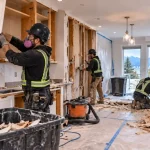
Office demolition is the most common type in Vancouver: stripping a suite or a floor back to base building condition between tenants, or gutting a floor for a new layout. Ceiling grids, ductwork, low-voltage cabling, demountable partitions, and carpet tile all come out; the structure, the envelope, and the base building services stay.
Retail demolition covers storefronts, strip-mall bays, and big-box space — often on a tight schedule between one tenant leaving and the next one’s fit-out starting. Shared walls with neighbouring tenants who stay open are the defining challenge: dust, noise, and vibration must be controlled so the business next door keeps trading.
Industrial and warehouse demolition involves larger structures, heavier framing, and often specialised contents: racking, mezzanines, heavy equipment pads, loading docks, and sometimes contaminated soils or process residues that need assessment before work starts.
Restaurant and hospitality demolition adds grease systems, commercial kitchen equipment, walk-in coolers, and ventilation that must be disconnected and removed by licensed trades.
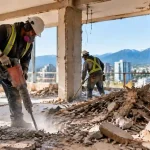
Full commercial building demolition takes the entire structure down — usually for redevelopment — and adds engineered demolition plans, traffic management, and coordination with the city around hoarding, sidewalk protection, and neighbouring buildings.
Commercial Demolition vs Residential: What Is Different?
The fundamentals are the same — survey, permit, disconnect, demolish, haul — but commercial work adds layers residential jobs rarely have:
- Occupied buildings. Demolition often happens while other tenants, or the client’s own operations, continue in the same building. Work is phased, scheduled around trading hours, and sometimes done at night or on weekends.
- Strata and landlord requirements. Commercial strata corporations and landlords set their own rules: work hours, elevator bookings, protection of common areas, insurance certificates, and make-good standards that define exactly what “back to base building” means.
- Larger hazmat scope. Commercial buildings — especially pre-1990 offices, warehouses, and retail — can contain asbestos in pipe insulation, ceiling tiles, floor tiles, fireproofing, and mechanical rooms, plus lead paint and PCBs in older light ballasts. The hazardous materials survey covers the whole scope, not just one room.
- Engineered plans. Larger or complex demolitions require a demolition plan signed and sealed by a professional engineer registered in BC, and the City of Vancouver may require it based on the building’s size, condition, or proximity to other structures.
- Waste volumes and recycling. Commercial jobs generate far more debris, and Metro Vancouver’s construction waste rules expect sorting and diversion. Steel, concrete, wood, drywall, and ceiling tile are separated for recycling wherever practical.

Permits and Hazmat Surveys: What BC Requires
Commercial demolition in Vancouver sits under two layers of rules: municipal permits and provincial safety regulation.
The demolition permit. In the City of Vancouver, a demolition permit is required to completely remove any type of building or structure from a site. The city’s Demolition of Buildings bulletin (2026-002-BU) sets out the process: application with the required checklist documents — including a contractor declaration, a qualified professional declaration for salvage and abatement, a demolition plan, and a survey plan — plus a tree barrier / pre-demolition inspection and inspections during the work. For interior-only commercial work, a building permit to alter the building usually applies instead. Hazardous building materials must be identified, removed, and disposed of in accordance with all applicable regulations before demolition begins.
The hazardous materials survey. Before any demolition or renovation work that could disturb hazardous materials, BC’s OHS Regulation section 20.112 requires a qualified person to identify them. For a commercial building, that means a full pre-demolition hazardous materials survey of the entire structure by a certified surveyor — asbestos, lead, and other hazards, with lab analysis and a written report. If asbestos is found, removal must be done by a licensed abatement contractor before demolition proceeds; since January 1, 2024, asbestos abatement contractors in BC must hold a WorkSafeBC licence and abatement workers must be certified. Our guide to what a hazmat report covers explains the survey and the report in detail.
Why the survey matters more on commercial jobs. The asbestos risks in demolition are greater in commercial buildings because the materials are more varied, the volumes are larger, and more workers are exposed. A missed asbestos-containing material discovered mid-demolition stops the whole job until it is contained and removed — and on a commercial schedule, every stopped day costs money. The survey is cheap insurance against the most expensive delay in the project.
How Commercial Demolition Works, Step by Step
- Site visit and written scope. The contractor walks the building with the owner or property manager, reviews the structure, access, neighbouring tenants, and the end state (full clearance, base building, or selective strip-out), and puts the scope and price in writing.
- Hazardous materials survey. A certified surveyor inspects the full scope. Lab results come back, and any abatement is scheduled first.
- Permits and planning. The demolition permit (or building permit for interior work) is applied for. For larger jobs, an engineered demolition plan is prepared. Traffic management, hoarding, and sidewalk protection are planned with the city.
- Tenant and neighbour coordination. Work hours, noise windows, elevator bookings, and access routes are agreed with the landlord, strata, and neighbouring tenants. If the business stays open during the work, phasing is planned around trading hours.
- Abatement. Licensed abatement crews remove asbestos and other hazardous materials under containment, with clearance testing where required.
- Utility disconnection. Electrical, gas, water, and telecom services to the demolition scope are shut off and confirmed dead before any machine touches the building.
- Phased demolition. Work proceeds in phases — typically top-down for full demolitions, zone by zone for strip-outs — with dust and noise control throughout. Materials are sorted on site for recycling: steel, concrete, wood, drywall, and ceiling tile.
- Haul-off and clearance. Debris goes to licensed facilities with disposal documentation. The site is cleaned, graded where required, and handed over with the paperwork: permits closed, inspections passed, waste records filed.
Timelines vary widely: an office suite gut-out of 2,000–5,000 square feet typically takes 3–5 business days of on-site work; a full commercial building of 10,000 square feet takes 1–2 weeks for mechanical demolition and debris removal. Permitting and the hazmat survey add weeks up front — plan for them in the project schedule, not as an afterthought.
Minimising Disruption: Phased Work in Occupied Buildings
For most commercial clients, the question is not just “can you demolish it” but “can you demolish it without shutting us down.” Phased work is how that happens:
- Zoned demolition. The building is divided into zones. One zone is demolished and cleared while the others keep operating, then the crew moves on. Containment barriers and negative air pressure keep dust out of the occupied zones.
- Off-hours scheduling. Noisy work — breaking concrete, cutting steel — is scheduled before opening, after closing, or on weekends, with quieter work (sorting, hauling, cleanup) during business hours.
- Separate access routes. Demolition crews, bins, and trucks use a service entrance or laneway, not the customer entrance. Elevator use is booked so tenants are not waiting behind debris carts.
- Noise and vibration control. Work is sequenced to keep the loudest tasks short and predictable, and neighbours get a schedule in advance rather than surprises.
- Communication. A single point of contact, a weekly schedule, and advance notice of any disruptive work. Most commercial disputes about demolition are communication failures, not technical ones.
Ask any commercial demolition contractors you are considering how they have handled occupied-building work before — and ask for a reference from a property manager, not just a homeowner. The skill set is different, and the reference check is where it shows.

What Does Commercial Demolition Cost in Vancouver?
Commercial demolition cost in Vancouver is usually priced per square foot for strip-outs and as a project price for full demolitions, and the range is wide because the scope varies so much. As a general guide, published North American cost guides put standard commercial demolition at roughly $4 to $8 per square foot for single-storey structures, with interior-only strip-outs at the lower end and full teardowns with foundation removal at the higher end. A 5,000-square-foot office building therefore lands in the tens of thousands of dollars for the demolition scope alone, before permits, hazmat survey, and abatement.
What moves the price:
- Building type and construction. A wood-frame retail bay costs less per square foot than a concrete or steel-frame industrial building.
- Scope. Interior-only strip-outs typically cost 30–50% less per square foot than full teardown, because there is no foundation removal and far less debris.
- Hazmat. The survey itself is a modest cost; abatement, if asbestos is found in volume, is a separate licensed scope that can be significant.
- Access and location. Downtown sites with no staging area, laneway-only truck access, and hoarding requirements cost more than suburban sites with room to work.
- Phasing and hours. Night and weekend work, and phased work around operating tenants, add labour cost — but far less than the cost of closing the business.
The only accurate price for your building comes from a site visit and a written scope. Call Synchron Demolition & Abatement for a free on-site assessment and a written commercial quote — the building, the access, and the phasing all have to be seen before a number means anything.

Choosing a Commercial Demolition Contractor in Vancouver
Commercial demolition is a different discipline from residential teardown, and the commercial demolition contractors you shortlist should show it. Our comparison of the best demolition contractors in Vancouver covers the general checklist; for commercial work, add these:
- Commercial references — property managers and general contractors, not just homeowners.
- A hazmat process they explain without being asked, including the survey, the licensed abatement step, and clearance documentation.
- Phasing and occupied-building experience, with a written plan for dust, noise, access, and hours.
- Insurance and WorkSafeBC compliance appropriate to commercial sites, with certificates provided up front.
- Recycling and disposal documentation for the waste streams the job generates.
Synchron Demolition & Abatement brings demolition and abatement under one roof — demolition in Vancouver for offices, retail, and industrial buildings, plus industrial asbestos removal for the hazmat scope that commercial buildings so often carry. As experienced residential demolition contractors in Vancouver and commercial demolition specialists, the team works with property managers, general contractors, and business owners across Metro Vancouver. As a North Vancouver asbestos removal company, Synchron surveys first, sequences abatement before demolition, and demolishes in phases that keep your business running. Call Synchron Demolition & Abatement for a free site visit and a written commercial quote — and get the project planned properly before the schedule starts costing you money.
Commercial Demolition: Building Types at a Glance
| Building type | Typical scope | Usual on-site time | Key consideration |
|---|---|---|---|
| Office suite gut-out (2,000–5,000 sq ft) | Ceilings, partitions, cabling, carpet | 3–5 days | Occupied building; after-hours noise work |
| Retail strip-out (single bay) | Storefront to shell | 3–7 days | Neighbouring tenants stay open |
| Restaurant strip-out | Kitchen, grease systems, coolers | 1–2 weeks | Licensed trades for gas and refrigeration |
| Warehouse / light industrial | Structure, racking, mezzanine, dock | 1–3 weeks | Heavy framing; possible soil assessment |
| Full commercial building (10,000 sq ft) | Complete teardown + foundation | 1–2 weeks | Engineered plan; traffic and hoarding |
On-site time only. Add weeks for the hazmat survey, any abatement, and permitting.
Frequently Asked Questions
How much does commercial demolition cost in Vancouver?
Published cost guides put standard commercial demolition at roughly $4 to $8 per square foot, with interior-only strip-outs at the lower end and full teardowns at the higher end. A 5,000-square-foot office building typically lands in the tens of thousands of dollars for the demolition scope, before permits, hazmat survey, and abatement. A site visit and written scope are the only way to get an accurate quote.
Do I need a hazardous materials survey before commercial demolition?
Yes. BC’s OHS Regulation section 20.112 requires a qualified person to identify hazardous materials before demolition or renovation work that could disturb them. For a commercial building, that means a full pre-demolition survey of the entire structure. If asbestos is found, licensed abatement must be completed before demolition starts.
Can demolition happen while my business stays open?
Often, yes. Phased work divides the building into zones, with containment and negative air pressure keeping dust out of occupied areas, and noisy work scheduled outside trading hours. Whether it is feasible depends on the scope and the building layout — a site visit will tell you.
Do I need a permit for commercial demolition in Vancouver?
Yes. The City of Vancouver requires a demolition permit to completely remove a building or structure, and a building permit to alter for interior-only work. Larger or complex demolitions may also require an engineered demolition plan signed by a BC-registered professional engineer. Your contractor should handle the application as part of the job.
How long does commercial demolition take?
An office suite gut-out of 2,000–5,000 square feet takes 3–5 business days on site; a full 10,000-square-foot commercial building takes 1–2 weeks for mechanical demolition and debris removal. Add weeks up front for the hazmat survey, any abatement, and permit processing.