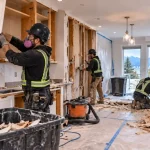
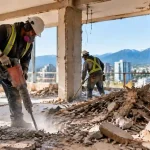
When we tear down old structures, safety is always our top priority. One of the most significant hidden dangers in buildings constructed before the 1980s is asbestos. To truly understand why professional demolition and asbestos removal require such strict safety protocols, we must look at the exact mechanisms of asbestos-related disease development.
In this post, we will break down this complex topic using a clear, structured approach, examining the distinct categories of how asbestos physically harms the body, where the exposure happens on a job site, and the mechanisms we implement to prevent it.

How Asbestos Harms the Body
To understand the danger, we must look at what happens when asbestos fibers enter the human body. The development of deadly diseases like asbestosis, lung cancer, and mesothelioma occurs through three main, non-overlapping physiological mechanisms:
-
Physical Damage: Asbestos fibers have a unique, microscopic, needle-like structure. When inhaled, these sharp fibers bypass the body’s natural airway filters and penetrate deep into lung tissue.
Example for clarity: Imagine inhaling microscopic shards of indestructible glass. Because the body cannot naturally break these mineral fibers down, they cause direct, permanent physical damage to the delicate air sacs in the lungs.
-
Oxidative Stress: Once lodged inside the body, asbestos fibers generate reactive oxygen species (ROS). These are unstable molecules that damage critical cellular components, including proteins, lipids, and DNA.
Example for clarity: Think of oxidative stress like cellular “rusting.” Just as oxygen and water cause metal to rust and degrade over time, ROS damage the DNA of healthy cells, which acts as a primary catalyst for cancerous mutations.
-
Chronic Inflammation: The human immune system is designed to attack foreign invaders. When asbestos fibers penetrate the lungs, the body’s defense mechanism tries to engulf and destroy them using specialized cells called macrophages. Because the fibers are highly resistant, the immune system remains in a permanent state of attack, triggering the continuous release of pro-inflammatory cytokines and growth factors.
Example for clarity: It is like a scab that is constantly picked at and never allowed to heal. Over decades, this relentless internal inflammation leads to severe scarring (fibrosis) and creates the perfect environment for tumors to develop.
How Exposure Happens During Demolition
Having understood the internal biological mechanisms, we must categorize the external mechanisms—how workers and the public actually come into contact with these deadly fibers. The construction and demolition industry is one of the highest-risk sectors, representing a massive portion of occupational exposure globally. Exposure pathways fall into three distinct sources:
-
Primary Sources: This involves the direct handling of raw asbestos fibers, typically seen in historic asbestos mining or the manufacturing of asbestos goods. While less common today, it represents the historic root of the global asbestos crisis.
-
Secondary Sources (The Demolition Danger): This is the most critical area for our industry. Secondary exposure occurs when workers disturb Asbestos-Containing Materials (ACMs) during renovation, maintenance, or demolition activities.
Example for clarity: Tearing down a wall that contains old asbestos insulation, cutting through contaminated roofing shingles, or breaking up vintage floor tiles releases invisible clouds of toxic dust. Even the simple act of cleaning equipment contaminated with this dust triggers dangerous secondary exposure.
-
Environmental Sources: Exposure can also happen passively. Working inside older buildings where asbestos materials are actively deteriorating, or living near contaminated demolition sites, can result in inhaling airborne fibers without ever touching the materials directly.
The scale of these exposure mechanisms is massive; globally, an estimated 125 million people are exposed to asbestos in the workplace, leading to over 107,000 deaths annually.

How We Stop Exposure Before It Starts
At Synchron Demolition, understanding how the disease develops is what drives our rigorous safety standards. To prevent the biological mechanisms from ever starting, we implement a comprehensive, multi-layered system of protective mechanisms to stop exposure:
-
Engineering Controls: We stop the fibers at the source before they can become airborne. This includes utilizing “wet methods,” which means heavily applying water or wetting agents to asbestos-containing materials before and during cutting or tearing them down.
Example for clarity: Just as spraying water on dry dirt prevents a dust storm when you sweep, wetting asbestos prevents the microscopic needles from floating into the air. We also use Local Exhaust Ventilation (LEV) systems with specialized HEPA filters to capture any stray fibers.
-
Administrative Controls: We tightly control how work is executed. This involves restricting site access only to authorized, highly trained personnel and conducting thorough risk assessments and building inspections before a single sledgehammer is swung.
-
Personal Protective Equipment (PPE): When engineering controls are not enough, specialized PPE acts as the final barrier. Our teams use advanced respiratory protection, such as Powered Air-Purifying Respirators (PAPRs), and wear full-body disposable protective clothing to ensure no fibers are inhaled or carried home to their families.
Conclusion
The mechanisms of asbestos-related diseases are silent and relentless. Once those needle-like fibers enter the body, the physical damage, oxidative stress, and chronic inflammation can progress unnoticed for decades before a severe disease appears.
That is exactly why professional, strictly controlled demolition is non-negotiable. At Synchron Demolition, we take pride in understanding these risks from the microscopic biological level to the practical, job-site level. By adhering to the highest safety standards, we ensure that every structure we bring down is dismantled safely, protecting our workers, our clients, and the surrounding environment from the hidden dangers of asbestos.
The Three Main Diseases Caused by Asbestos
The asbestos risks in demolition come down to three diseases. All three are caused by breathing in asbestos fibres, all three take decades to appear, and there is no safe level of exposure.
Mesothelioma
Mesothelioma is a rare cancer of the lining around the lungs (and, less often, the abdomen). It is almost always caused by asbestos exposure, and it usually appears 20 to 40 years after the fibres were breathed in. By the time symptoms show up — breathlessness, chest pain and a persistent cough — the disease is usually advanced, and treatment can only slow it down. Mesothelioma is the main reason demolition work on older buildings is so strictly controlled.
Lung cancer
Asbestos exposure also causes lung cancer. The risk rises with the amount of asbestos breathed in and the number of years of exposure, and it is far higher in workers who also smoke. Unlike mesothelioma, lung cancer has other causes too, but asbestos is one of the leading work-related causes. The fibres damage the DNA in lung cells over many years, and the cancer may not appear until decades after the exposure happened.
Asbestosis
Asbestosis is scarring of the lung tissue itself. The tiny fibres lodge deep in the lungs, the immune system attacks them for years, and the lung tissue slowly stiffens with scar tissue. Breathing becomes harder and harder, and the damage cannot be reversed. Asbestosis usually follows heavy, long-term exposure, but even lower exposures add to the risk. People with asbestosis also face a higher risk of lung cancer.
What makes all three diseases so dangerous is the delay: a worker can feel perfectly healthy for decades after breathing in fibres. Most exposures on a demolition site happen when materials such as asbestos cement are broken or cut, so our guide to asbestos cement hazards explains how the fibres are released and what controls stop them. The controls in this article — the hazmat survey, containment, respirators and clearance testing — are the only way to stop an exposure that would otherwise stay silent for 20 to 40 years.
What a Hazmat Survey Finds Before Demolition
A hazmat survey is a room-by-room inspection of a building by a qualified surveyor, who takes small samples of any material that could contain asbestos and sends them to a laboratory. In BC, a survey is required before demolition or renovation of a pre-1990 building, because you cannot tell whether a material contains asbestos just by looking at it.
The survey usually finds the same materials again and again: drywall joint compound, popcorn or stipple ceilings, vinyl floor tiles and sheet flooring, pipe insulation and duct wrap, cement board and roofing, plaster, textured coatings such as Artex, and vermiculite insulation. For each one, the report records where it is, how much there is, and what condition it is in — damaged, crumbly material is far more dangerous than material that is intact and sealed.
The survey report then decides what happens next. Material in good condition can sometimes be left in place and managed, while damaged or disturbed material must be removed by licensed asbestos removal crews before demolition begins. The report also sets the scope of the removal, the type of containment needed, and whether clearance air testing is required afterwards. Keep the report on file: the City and WorkSafeBC may ask for it, and future trades need to know where asbestos remains in the building.
What Good Looks Like: Hiring a Demolition Contractor
Before you hire a demolition contractor for a pre-1990 building, check these points. Remember that in BC, homeowners cannot remove asbestos themselves — see who can legally remove asbestos in BC.
-
A current asbestos abatement licence, and trained, certified workers on the crew.
-
A hazmat survey done before any demolition starts — and a written plan for removing what it finds.
-
Proper containment, negative air pressure and wet methods during removal, with respirators and disposable coveralls for the crew.
-
Clearance air testing after removal, with a written report before anyone goes back in.
-
Double-bagged, labelled waste taken to an approved disposal facility — not a regular landfill.
-
Liability insurance and recent local references you can check.
-
A written, itemised quote that lists the survey, removal, testing and disposal separately.
If a contractor offers to start demolishing without a survey, or cannot show a licence, walk away. The cheapest quote is usually the one that skips the safety steps — and those are the steps that protect your workers, your neighbours and your family. Synchron Demolition works to this standard on every demolition job. When the work is done, ask when it is safe to return after asbestos removal, so you know the area passed clearance before anyone goes back in.
How asbestos exposure happens during demolition
|
Activity |
Risk level |
Control required |
|---|---|---|
|
Breaking asbestos cement sheets |
High |
Full containment, respirators, wet methods |
|
Removing pipe lagging |
High |
Licensed crew, negative air pressure |
|
Demolishing drywall with joint compound |
Medium–high |
Survey first, wet removal, air monitoring |
|
Working near intact, undisturbed asbestos |
Low |
Leave in place, monitor condition |
|
Post-removal cleaning |
Medium |
HEPA vacuuming, clearance air testing |
Frequently Asked Questions About Asbestos Risks in Demolition
What are the main health risks of asbestos exposure during demolition?
The main risks are mesothelioma, lung cancer and asbestosis, all caused by breathing in asbestos fibres. These diseases develop slowly, often 20 to 40 years after exposure, and there is no safe level of exposure. That is why demolition work on older buildings must start with a hazmat survey and proper controls.
How are workers protected from asbestos during demolition?
Workers are protected by containment barriers, negative air pressure, respirators, disposable coveralls and decontamination showers. The work area is sealed off, air is monitored, and waste is double-bagged and labelled. Only trained, licensed workers may enter the containment area during high-risk removal.
Can asbestos exposure happen if the material looks intact?
Yes, if intact material is disturbed. Cutting, drilling, breaking or demolishing asbestos-containing materials releases fibres even when the material looked fine beforehand. That is why a hazmat survey is required before demolition — you cannot judge the risk by appearance alone.
How long after exposure do asbestos diseases appear?
Asbestos diseases usually appear 20 to 40 years after exposure, which is why they are so dangerous: workers may feel fine for decades. Mesothelioma and lung cancer are the most serious outcomes, and the risk rises with the amount and length of exposure, so even brief uncontrolled exposure matters.
What should happen before demolition starts on a pre-1990 building?
A qualified surveyor must carry out a hazmat survey, sampling suspect materials for lab testing. If asbestos is found, a licensed contractor removes or encapsulates it, and clearance air testing confirms the area is safe. Only then can demolition begin, and the survey report must be kept on file.
Is demolition dust dangerous even if it does not contain asbestos?
Yes. Demolition dust can contain silica, lead paint particles and other irritants that damage lungs and eyes. Workers should wear respirators and the site should use water suppression and dust controls on every job, whether or not asbestos was found in the survey.
Sources
-
WorkSafeBC — Asbestos: https://www.worksafebc.com/en/health-safety/hazards-exposures/asbestos — supports the exposure controls and licensing rules for demolition work.
-
WHO — Asbestos: https://www.who.int/news-room/fact-sheets/detail/asbestos — supports the disease risks and latency periods.
-
CDC NIOSH — Asbestos: https://www.cdc.gov/niosh/topics/asbestos/ — supports worker protection and exposure limits.
-
IARC — List of Classifications: https://monographs.iarc.who.int/list-of-classifications — supports asbestos being classified as carcinogenic to humans.
-
Health Canada — Asbestos and your health: https://www.canada.ca/en/health-canada/services/air-quality/indoor-air-contaminants/health-risks-asbestos.html — supports the Canadian health guidance on asbestos exposure.