Mould isn’t just an eyesore. It’s a sneaky intruder that can damage your home and affect your health without you even realizing it. If you live in Vancouver, where the climate is often damp and rainy, mould has even more chances to grow indoors and out. But where does mould grow exactly? Let’s break it down in simple terms.

What is Mould and Why It Grows?
Mould is a type of fungus that spreads through tiny spores floating in the air. It thrives in damp, dark, and warm environments. In a city like Vancouver, where high humidity and frequent rain are the norm, homes are more likely to experience moisture issues that lead to mold.
When mould grows, it can cause breathing problems, allergies, and a musty smell that’s tough to get rid of. That’s why spotting it early and keeping it under control is so important. Some moulds are more hazardous than others — read about why black mold is dangerous so you know when to take extra care.
Indoor Areas Where Mould Commonly Grows
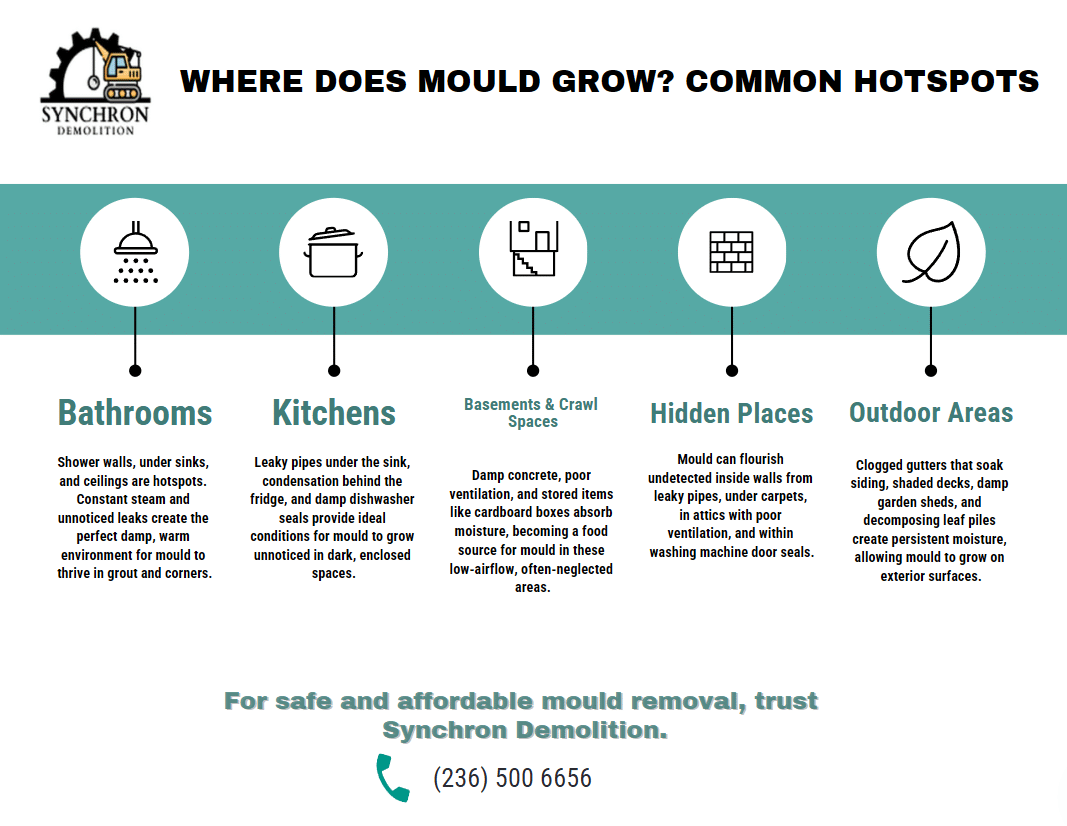
Here are some common rooms and problem areas in Vancouver homes where mould tends to show up. We’ve added a bit more detail to help you understand why these areas are such mould magnets.
Bathrooms
- Shower walls and tiles: These are constantly exposed to warm water and steam. Soap residue builds up, feeding mould spores. Without regular cleaning and ventilation, mould starts forming in grout lines and tile edges.
- Under sinks: This area often suffers from unnoticed leaks or trapped moisture. The enclosed space and darkness make it a favourite breeding ground for mould.
- Ceilings: After a hot shower, steam rises and condenses on cooler ceiling surfaces, especially in corners. If the ventilation is poor, this dampness lingers, encouraging mould growth.
- Behind the toilet: This area is usually overlooked during cleaning. Moisture from condensation or minor leaks, combined with limited airflow, creates ideal conditions for mould to thrive.
Kitchens
Under the sink: Leaky pipes are common in older Vancouver homes. Water can drip slowly and go unnoticed, especially inside closed cabinetry. Combined with wood materials and darkness, this creates an ideal mould habitat.
- Behind the fridge or stove: These large appliances are rarely moved, which means dust and moisture can build up unnoticed. Warmth from the appliances adds to the mould-friendly conditions.
- Dishwasher seals: The rubber gasket around the dishwasher door often stays damp after cycles. If not cleaned and dried regularly, this tight, dark space can develop mould colonies.
Basements & Crawl Spaces
- Concrete walls and floors: These can sweat during Vancouver’s humid summer days or become damp due to poor drainage. Without proper sealing or dehumidification, they stay wet for long periods.
- Stored boxes or furniture: Cardboard, fabrics, and even wooden furniture absorb moisture easily. In unheated basements, they become a food source for mould.
- Corners and cracks: These areas often have stagnant air. Poor airflow allows moisture to linger, making them a hotspot for mould.
Bedrooms & Living Areas
- Windowsills: Condensation from temperature differences builds up on glass and runs onto sills. If not wiped down regularly, this moisture can seep into the wood or drywall.
- Behind heavy furniture: Furniture placed against outside walls traps warm indoor air and blocks circulation. Moisture from the wall or air can get trapped and feed mould.
- Air vents: Dust and moisture can accumulate in ducts. When combined, they support mould growth inside HVAC systems, which then circulate spores through the home.
Less Obvious or Hidden Places
Even in a clean, well-kept home, mould can still find a way to grow in places you might never think to check.
 Mould around windows and tiles is a common sign of where does mould grow in damp bathrooms.
Inside walls and insulation
Water from roof leaks, burst pipes, or even minor drips can soak into wall cavities and insulation without showing obvious signs. Since these areas are dark and enclosed, they can hold onto moisture for weeks or even months, letting mould flourish out of view. Warning signs include a musty smell, bubbling paint, warped drywall or stains, and a professional inspection with moisture meters can find hidden mould.
Carpets and upholstery
If you’ve ever spilled a drink, had a pet accident, or experienced a flood, moisture can seep deep into carpets, pads, and fabric furniture. Even if the surface seems dry, the layers underneath can stay damp—especially in humid climates—leading to slow, hidden mould growth. Mould can start growing within 24 to 48 hours of materials becoming wet, so wet carpet or underlay that cannot be dried within two days may need to be removed. If you are lifting damp flooring to dry it out, first read does your linoleum contain asbestos, since older vinyl and linoleum can contain asbestos fibres.
Attics
Improperly ventilated attics are a prime mould zone. Warm air rises into the attic and meets cooler air, causing condensation. Add roof leaks from rain or melting snow, and you’ve got a high-moisture space. Without enough airflow, mould can grow on wood beams, insulation, or roof sheathing.
Washing machines & AC units
Front-loading washers often have rubber door gaskets that trap water after each cycle. Similarly, air conditioning units can collect condensation in their coils and drainage trays. If these parts aren’t cleaned regularly, they become a perfect place for mould to settle in and spread.
Outdoor Areas That Attract Mould
Mould doesn’t stop at your front door. With heavy rain, shady spots, and plenty of organic matter, the outdoors can be just as inviting to mould as any bathroom or basement.
- Siding and gutters: When gutters are clogged with leaves or debris, rainwater can back up and overflow, causing siding and trim to stay damp for long periods. This trapped moisture is a perfect home for mould and mildew.
- Decks and patios: Areas that don’t get much sunlight—like shaded corners or spaces under patio furniture—often stay wet after rain. If water pools and doesn’t evaporate quickly, mould can grow between boards or on concrete surfaces.
- Garden sheds: These structures are often left closed for long stretches, especially during rainy seasons. Without proper airflow, moisture builds up inside and leads to mould on walls, tools, and storage boxes.
- Leaf piles: When leaves fall and pile up—especially in the fall—they start to decompose and hold onto moisture. Mould spores thrive in this mix of organic material and water, making leaf piles a frequent but forgotten mould zone.
Where Mould Grows: Indoor and Outdoor Hotspots
| Location | Why mould grows there | Prevention tip |
|---|---|---|
| Bathroom | Steam, splashes, poor ventilation | Run the exhaust fan during and after showers |
| Basement | Ground moisture, leaks, poor airflow | Use a dehumidifier; seal foundation cracks |
| Attic | Roof leaks, poor ventilation, condensation | Check insulation and roof vents yearly |
| Kitchen | Cooking steam, sink leaks | Run the range hood; fix drips promptly |
| Windows and walls | Condensation on cold surfaces | Wipe condensation; improve insulation |
| Outdoors (siding, decks) | Rain, shade, trapped moisture | Clean gutters; keep siding clear of soil |
Quick Tips to Prevent Mould in Vancouver Homes
- Keep your home dry: Use fans and dehumidifiers, especially during rainy seasons.
- Fix leaks fast: Even small drips can cause big problems.
- Let air flow: Open windows on dry days and move furniture away from walls.
- Clean regularly: Focus on damp areas like bathrooms and basements.
- Use mould-resistant materials when renovating.
For more on what causes mould in the first place, read the guide to the 7 common causes of mold in Vancouver homes.
If You Suspect Mould in Your Walls or Anywhere in Your Home
If you notice signs of mould—such as a musty smell, bubbling paint, or unexplained allergies—or if you suspect there might be hidden mould behind your walls, don’t ignore it. Disturbing mould without proper protection can actually make things worse by releasing more spores into your living space.
Instead of taking risks, call in the professionals. At Synchron Demolition, we offer safe, certified, and cost-effective professional mould removal and inspection services. Whether the mould is visible or hidden deep inside your walls, our trained team uses advanced equipment and proven methods to eliminate it at the source.
We’re local, experienced, and committed to helping homeowners across the Lower Mainland breathe easier. Let us take care of the problem, so you don’t have to.
Frequently Asked Questions
Where does mould grow most often in a house?
Mould grows wherever moisture collects: bathrooms, kitchens, basements, attics, around windows, under sinks and behind walls. It feeds on drywall, wood, paper and dust. Any surface that stays damp for more than a day or two can support mould growth, so controlling moisture is the key.
Can mould grow inside walls without any visible signs?
Yes. Leaks inside walls, condensation in wall cavities and poor insulation can keep materials damp enough for mould to grow unseen. Warning signs include a musty smell, bubbling paint, warped drywall or stains. A professional inspection with moisture meters can find hidden mould.
Does mould grow in winter in Vancouver?
Yes. Vancouver winters bring rain, high humidity and cold surfaces where condensation forms, especially on windows and poorly insulated walls. Indoor heating and daily activities add moisture, so mould can grow even in the coldest months. Ventilation and humidity control are important all year, not just in summer.
What temperature does mould need to grow?
Most indoor moulds grow best between 20°C and 30°C, but they can grow in cooler conditions too, as long as moisture is present. Temperature alone will not stop mould. Keeping surfaces dry matters far more than keeping rooms cold, so fix leaks and ventilate well.
How quickly can mould grow after a water leak?
Mould can start growing within 24 to 48 hours of materials becoming wet. That is why leaks, floods and spills should be dried quickly. If wet drywall or carpet cannot be dried within two days, it may need to be removed. Call a professional if the affected area is large.