Asbestos ceiling tiles can be a hidden danger in older homes and buildings. If disturbed, they can release harmful fibers into the air. Asbestos ceiling tile removal in BC is licensed work: it must be carried out by a licensed asbestos abatement contractor working under WorkSafeBC rules, not by the homeowner. Removing tiles yourself can release large amounts of fibres into the air, put your household at risk, and lead to stop-work orders or fines.
In Vancouver, Synchron Demolition offers professional asbestos removal and asbestos testing services to ensure your safety. If your ceiling tiles may contain asbestos, book testing first and do not disturb them until you know what you are dealing with.
Ceiling materials in older BC homes often go together: many homes with asbestos ceiling tiles also have textured popcorn ceilings, and the removal process is similar — testing, containment, licensed removal and clearance. If you are planning the work, read our guide to the cost of removing asbestos Artex in BC, and find out how long after asbestos removal it is safe to move back into the room.
Identifying Asbestos Ceiling Tiles
- Common in buildings constructed before the 1990s.
- Often found in textured, drop, or acoustic tiles.
- It cannot be identified by sight alone, testing is required.
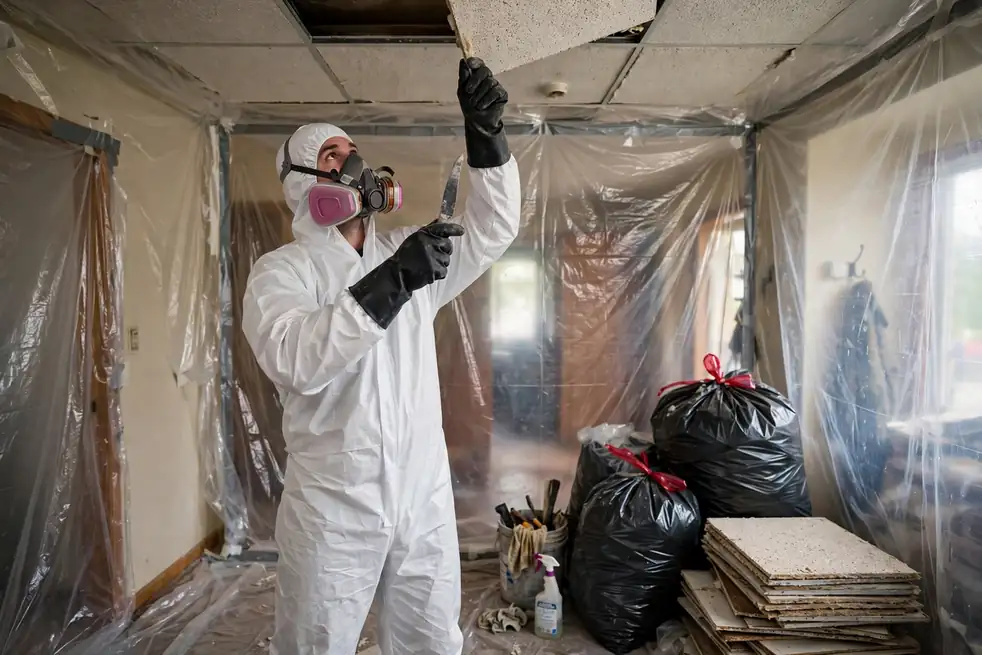
Asbestos ceiling tiles look much like ordinary acoustic tiles, which is why appearance alone is never enough. Tiles installed before the 1990s should be treated as suspect until a sample has been analysed by a lab. A licensed surveyor takes the sample safely, so there is no need to break or cut a tile yourself to find out.
BC Licensing Rules for Asbestos Ceiling Tile Removal
Since January 2024, WorkSafeBC requires companies that perform asbestos abatement work in BC to hold a WorkSafeBC asbestos abatement licence, and the workers carrying out the removal must be trained and certified for the work. That is why asbestos ceiling tile removal is not a homeowner job in BC: a licensed contractor works under WorkSafeBC rules, with the containment, protective equipment, waste handling and clearance testing the regulations require. Removing ceiling tiles yourself can release large amounts of fibres into the air, put your household at risk, and lead to stop-work orders or fines. Before any work starts, check that the contractor you hire holds a current WorkSafeBC asbestos abatement licence and will provide written clearance documentation when the job is done.
What a licensed professional does
When a licensed team removes asbestos ceiling tiles, the work follows a controlled sequence:
- Test first: the tiles are sampled and analysed by a lab before any work begins.
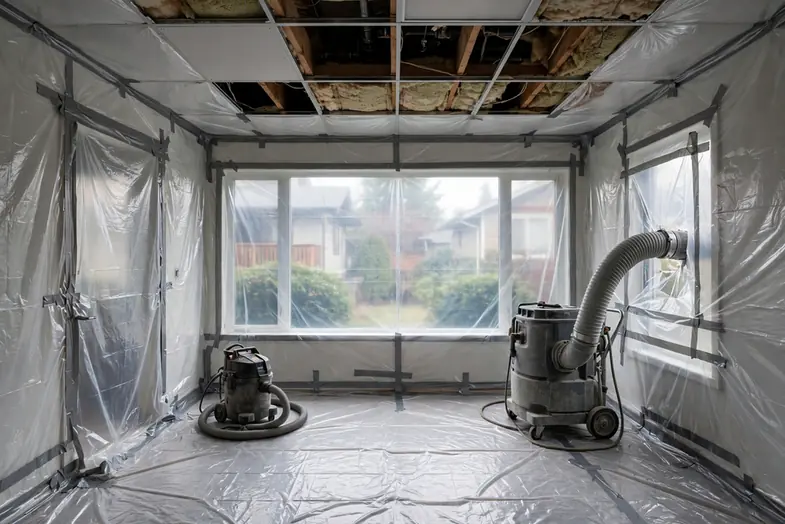
- Seal off the work area: the room is sealed with plastic sheeting and placed under negative air pressure, with warning signs to keep others out.
- Work in protective gear: the crew wears respirators and protective suits, and the tiles are wetted to keep fibres down.
- Remove the tiles carefully: tiles are taken down without breaking them and placed straight into sealed, labelled bags.
- Clean the area: surfaces are wiped down and the area is HEPA-vacuumed to remove remaining particles.
- Clearance testing: air monitoring and clearance testing confirm it is safe to re-enter the room.
Ceiling tile removal — DIY vs licensed professional
| Step | DIY (homeowner) | Licensed professional |
|---|---|---|
| Testing first | Do not guess — arrange testing | Lab analysis before any work |
| Containment | Not equipped | Sealed work area, negative air pressure |
| Removal | Do not attempt | Wet removal, careful handling, protective suits |
| Disposal | Illegal in regular garbage | Bagged, labelled, authorized facility |
| Clearance | Cannot self-certify | Air monitoring and clearance certificate |
What homeowners should NOT do
- Do not remove, break, cut, drill or sand ceiling tiles yourself.
- Do not sweep, vacuum or dust debris with a household vacuum — that spreads fibres through the air.
- Do not put asbestos waste in regular garbage.
- Do not enter the room or use its heating or ventilation while tiles are damaged or work is under way.
- Do not start a renovation that disturbs the ceiling until testing is done.
Proper Disposal & Cleanup
- Never dispose of asbestos materials in regular trash.
- Your licensed contractor double-bags waste in labelled asbestos disposal bags and takes it to an approved disposal site in Vancouver.
- The work area is wiped down and HEPA-vacuumed by the abatement team, and protective gear is disposed of as asbestos waste.
- Clearance air testing confirms the area is safe before you move back in.
Alternative Solutions to Removal
- Encapsulation: Seal asbestos tiles with special coatings.
- Covering: Install a drop ceiling over existing tiles.
- Hire a Professional: If you live in British Columbia, you can find a list of certified companies on WorkBC that specialize in safe asbestos removal and testing.
Encapsulation and covering can work when tiles are intact, but they still need testing first, and a licensed contractor should assess whether the ceiling is a good candidate. Sealing or covering over damaged tiles does not make them safe.
How to book testing and removal
Start with a call, not a crowbar. A licensed contractor will arrange sampling and lab testing, explain the results, and give you a written quote that covers containment, removal, disposal and clearance. The cost depends on the size of the area, the condition of the tiles, access, and whether clearance testing is included, so every job starts with testing and a site visit. Once the work is done, keep the clearance documentation with your home records — it matters for future renovations and for selling the home.
Conclusion
Removing asbestos ceiling tiles can be extremely dangerous if not done properly. If there’s any uncertainty, hiring a certified asbestos removal specialist is the safest and most responsible choice. At Synchron Demolition, we offer expert asbestos removal and asbestos testing services across Vancouver, North Vancouver, Burnaby, and West Vancouver. Our team ensures your home or business remains safe and compliant. Contact us today for professional, trusted assistance.
Frequently Asked Questions About Asbestos Ceiling Tile Removal
Can I remove asbestos ceiling tiles myself in BC?
No. In BC, asbestos removal must be done by a licensed asbestos abatement contractor working under WorkSafeBC rules. Removing ceiling tiles yourself can release large amounts of fibres into the air, put your household at risk, and lead to stop-work orders or fines. Testing and removal are jobs for licensed professionals.
How do licensed professionals remove asbestos ceiling tiles?
First they test the tiles and seal off the work area with plastic sheeting and negative air pressure. Wearing respirators and protective suits, they wet the tiles, remove them carefully without breaking them, and place them in sealed, labelled bags. The area is then HEPA-vacuumed and cleaned, and clearance air testing confirms it is safe to re-enter.
How much does asbestos ceiling tile removal cost in Vancouver?
The cost depends on the size of the area, the condition of the tiles, access, and whether clearance testing is included. Small jobs cost far less than a full ceiling replacement, but every job starts with testing. Get a written quote after a site visit, and make sure it covers containment, removal, disposal and clearance.
What should I do if a ceiling tile breaks and I suspect asbestos?
Leave the room, close the door, and keep other people and pets out. Do not vacuum, sweep or dust the debris — that spreads fibres through the air. Avoid using the room’s heating or ventilation, and call a licensed asbestos abatement contractor right away for advice and testing.
Sources
- WorkSafeBC — BC licensing rules for asbestos abatement contractors and safe work procedures.
- Health Canada — federal guidance on asbestos in ceilings and textured coatings.
- US EPA — asbestos in ceiling materials and hiring a professional.
- CCOHS — Canadian guidance on asbestos removal controls and protective equipment.