Thinking about replacing an aging Vancouver house or finally opening up a cramped kitchen? Before anything comes down, you need a plan for what stays, what goes, and what might be hidden behind the walls. Experienced residential demolition contractors in Vancouver do far more than operate excavators: they coordinate safe removal, protect neighboring property, and prepare a site for its next use.
In a city with older houses, tight laneways, and increasingly detailed waste-diversion rules, those details matter. A rushed demolition can trigger delays, unexpected hazardous-material costs, or damage to services that should have been isolated first.
This guide explains the different types of residential demolition, 2026 permitting expectations, asbestos safety, budgeting, and the questions worth asking before signing a contract.
What Does Residential Demolition Actually Include?
Not every demolition job involves removing an entire building. Selective demolition strips out specific components while protecting the structure; complete demolition removes a building to an approved extent, sometimes followed by foundation work under separate authorization.
The search phrase residential demolition contractors Vancouver can produce both specialist crews and general excavation businesses. Compare their experience with your particular scope rather than assuming every company offers the same services.
Full-House, Garage, and Exterior Removal
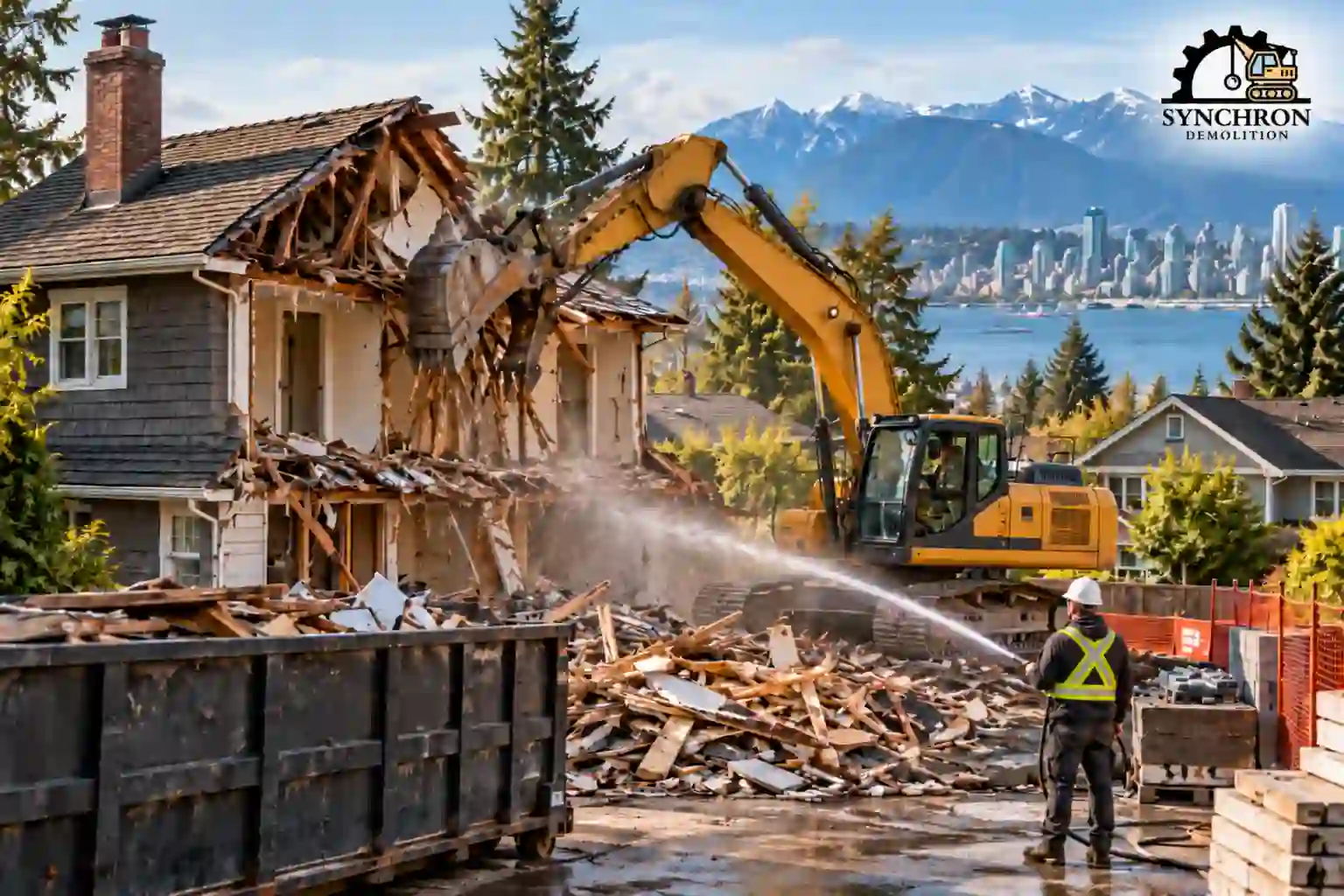
For a teardown, house demolition contractors Vancouver searches should lead to firms able to coordinate permits, utility isolation, hazardous-material assessments, equipment access, and waste hauling. Larger projects may require building demolition contractors in Vancouver with suitable machinery, insurance, and site-specific demolition plans.
Detached garages present their own challenges: shared fences, overhead wires, and narrow alleys. Someone searching garage demolition companies near me should ask whether slab removal, soil disturbance, and disposal are included.
For an old backyard swimming pool, pool demolition contractors in Vancouver should also explain drainage, engineered backfill where needed, and whether additional approvals apply.
Kitchens, Bathrooms, and Interior Renovations
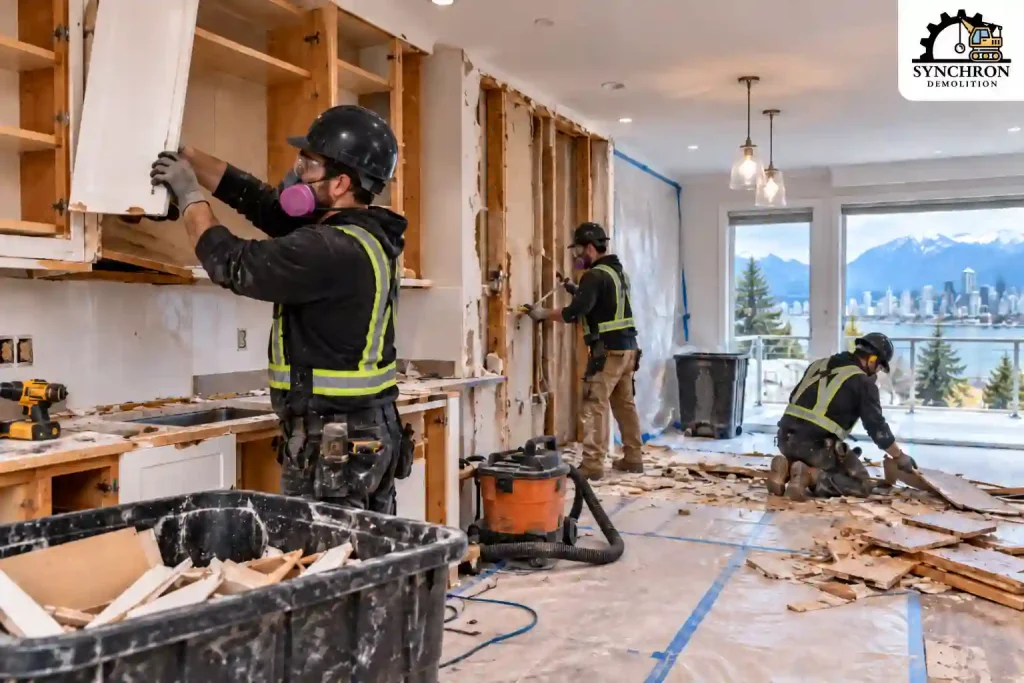
For renovation projects, interior demolition contractors in Vancouver may remove partitions, flooring, suspended ceilings, and non-structural finishes before rebuilding begins. However, changing a load-bearing wall or rerouting services requires the appropriate design and permits.
Homeowners hiring kitchen demolition contractors in Vancouver should confirm who disconnects appliances, plumbing, and electrical circuits. Similarly, bathroom demolition contractors in Vancouver must account for waterproofing layers, concealed plumbing, and possible asbestos-containing flooring or drywall compound.
Comparing demolition contractors in Vancouver is easier when every quote uses the same written scope and clearly lists exclusions.
Asbestos Risks in Demolition: What Homeowners Must Check
A home’s construction date offers clues, not a definitive asbestos diagnosis. WorkSafeBC explains that asbestos may occur in drywall joint compound, textured finishes, insulation, and other building products.
Although many asbestos products were phased out by the early 1990s, some have been found in newer buildings too.
For asbestos testing Vancouver, engage an appropriately qualified surveyor to assess materials that planned work could disturb. Sampling and laboratory analysis should inform a written hazardous-materials report before destructive work.
Never cut, sand, or break suspect materials to investigate them yourself.
Asbestos Cement Hazards and Other Hidden Materials
Asbestos-cement siding or other bonded products can release hazardous fibers if damaged during removal.
Lead-containing paint, silica-containing masonry, and contaminated dust also require assessment and appropriate controls. Moisture-damaged interiors may need a separate Mold Removal Vancouver assessment before reconstruction.
When asbestos removal Vancouver is necessary, choose a properly authorized abatement provider.
Since January 1, 2024, WorkSafeBC has required licensed employers undertaking asbestos abatement for others in buildings and certified people performing the relevant work. Ask to see current credentials and an abatement plan.
The cost of asbestos removal depends on material type, quantity, accessibility, containment, air monitoring where required, and regulated disposal.
A trustworthy estimate follows a survey rather than an unsupported price per square foot.
Vancouver Demolition Permits and Recycling Rules in 2026
The City of Vancouver requires a demolition permit to take down a building.
Permit packages may also involve tree protection, a pre-demolition inspection, recycling documentation, and a hazardous-building-materials assessment.
Structural alterations during interior renovations can trigger separate building permits, even without a full teardown.
Do not assume abatement or salvage can begin before permit issuance. Vancouver’s published demolition process specifies that non-structural salvage and abatement must wait until the applicable demolition permit is issued.
For houses built before 1950, Vancouver generally requires at least 75% reuse or recycling by weight of eligible non-hazardous demolition material.
Pre-1950 houses classified as character houses face a 90% threshold. Homes built before 1910 or listed on the heritage register also have a three-metric-tonne wood salvage requirement.
Vancouver Demolition Requirements at a Glance
| Vancouver requirement | Published figure | Why it matters |
| Pre-1950 house: qualifying material diversion | 75% by weight | Plan material sorting and receipts early |
| Pre-1950 designated character house | 90% by weight | More selective deconstruction may be needed |
| Pre-1910 or heritage-listed wood salvage | 3 metric tonnes | Identify reusable framing and lumber |
| Green demolition deposit for qualifying permits | $15,310 | Refund depends on meeting city requirements |
These are City of Vancouver requirements, not uniform rules across Burnaby and the North Shore. Verify your property’s category and current fees with the municipality.
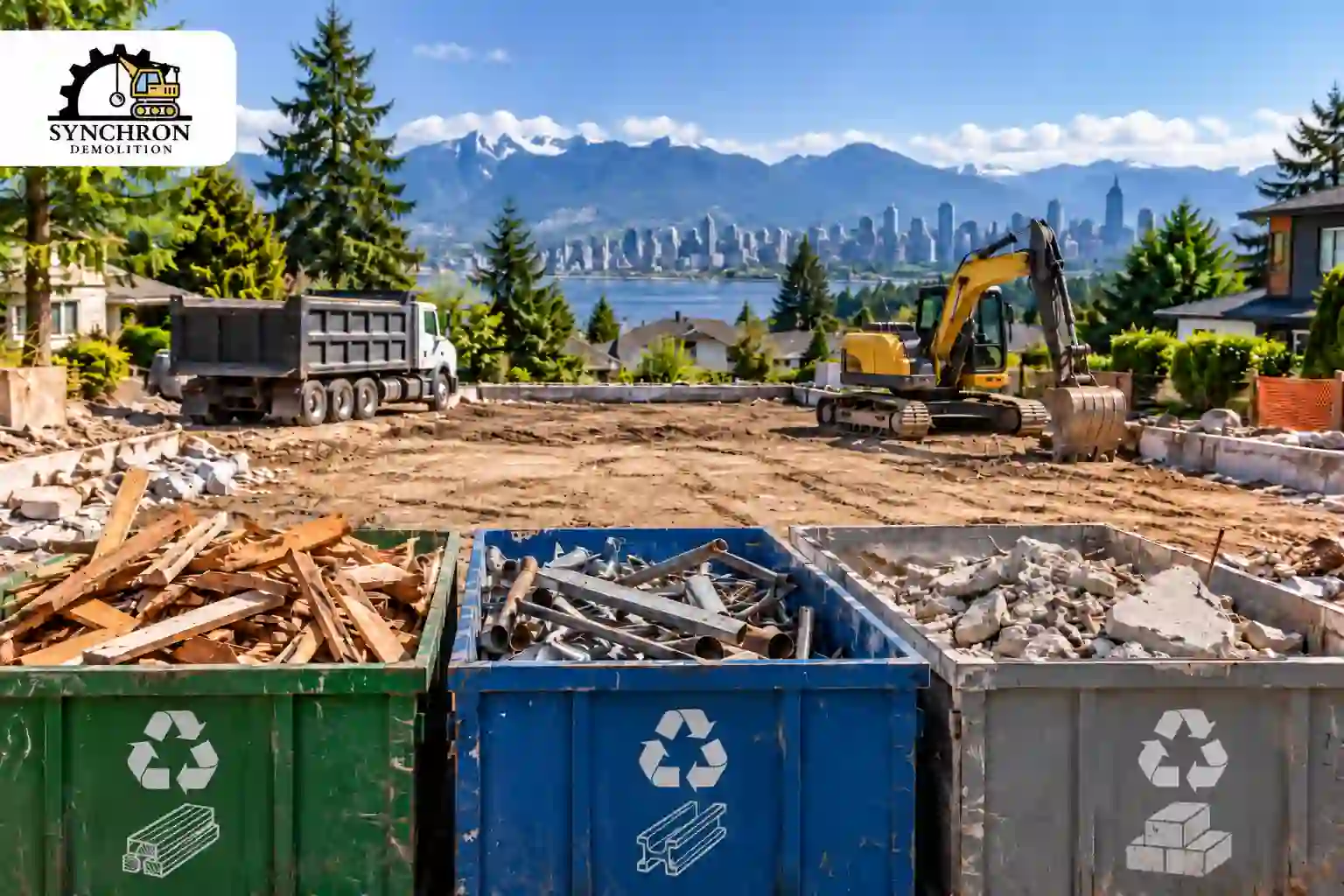
Metro Vancouver reports that construction, renovation, and demolition materials account for about one-third of regional landfill waste.
Separating clean wood, metal, concrete, and reusable fixtures can therefore make a real difference, not just satisfy paperwork.
A Real 2026 Vancouver Demolition Permit Example
A public City of Vancouver record for a 1948 detached house in East Vancouver provides a useful, verifiable example.
Permit DB-2026-01405 was issued on June 11, 2026, and marked completed on August 13, 2026.
The record lists a $45,000 declared work value, a 75% recycling condition, and required hazardous-materials and post-abatement reports.
It authorized demolition to grade, not unrestricted excavation.
This is a documented municipal permit, not a Synchron project and not evidence that $45,000 is the market price for another property.
The practical lesson is simple: the demolition scope, abatement documents, and diversion obligations need to align before heavy equipment arrives.
What Determines Residential Demolition Costs?
An accurate demolition budget is built from a site inspection and hazardous-materials information, not a single online average.
Small interior projects can still become complex when structural supports, hidden services, or occupied adjoining rooms need protection.
| Cost driver | Questions to ask before accepting a quote |
| Scope and structure | Does the price cover foundation, slab, and debris removal? |
| Hazardous materials | Are survey, abatement, testing, and clearance separate line items? |
| Access and machinery | Can equipment enter from a lane, or is smaller machinery required? |
| Permits and deposits | Who applies, pays, tracks compliance, and collects refunds? |
| Disposal and salvage | Are hauling, tipping fees, diversion receipts, and cleanup included? |
Request an itemized quote and keep a contingency for confirmed unknowns.
Avoid estimates that promise a guaranteed final price before necessary inspections have been completed.
Choosing a Contractor Across Greater Vancouver
A strong contractor should explain the work sequence without minimizing the risks.
Ask for proof of appropriate insurance, WorkSafeBC registration as applicable, references for comparable homes, and a clear division of responsibilities between demolition and abatement teams.
Synchron Demolition & Asbestos is a noteworthy local choice for homeowners seeking the best asbestos contractor in Vancouver, West Vancouver, North Vancouver, and Burnaby.
The North Vancouver-based company’s published services include demolition, asbestos assessment and removal, deconstruction, lead removal, and mold remediation across those communities.
Its service information can be reviewed at Synchron Demolition & Asbestos.
No marketing claim should replace due diligence: verify the current asbestos abatement license in WorkSafeBC’s registry, confirm the certification level of the assigned workers, and request a project-specific written proposal.
Five Questions to Ask Before Work Starts
- What exactly is being demolished, and what must remain undamaged?
- Which reports and permits are required, and who will obtain them?
- Who handles utility disconnections and verifies the site is safe?
- Where will debris go, and who supplies recycling and disposal records?
- What triggers a change order, and how will unexpected findings be documented?
Conclusion
The right demolition partner protects more than your construction schedule.
By identifying hazardous materials early, understanding Vancouver’s recycling obligations, and comparing detailed quotes, you can reduce surprises and prepare your property for a safer rebuild.
In 2026, the best approach is survey first, permit properly, abate where necessary, then demolish.
Choose residential demolition professionals who can explain each stage and provide the records to back it up.
Frequently Asked Questions
1. Do I need a permit to demolish a house in Vancouver?
Yes. The City of Vancouver requires a demolition permit to remove a building. Additional approvals and inspections can apply depending on the site and proposed redevelopment.
2. Must older Vancouver homes be tested for asbestos before demolition?
Potential asbestos-containing materials must be assessed by a qualified person before work that could disturb them. A home’s age alone does not establish whether asbestos is present.
3. How long does residential demolition take?
On-site removal may take days, but surveys, utility arrangements, permits, and abatement can substantially extend the schedule. Request a staged timeline rather than a single completion date.
4. Can demolition debris be recycled in Vancouver?
Yes. Eligible wood, metal, concrete, and other materials can be diverted, and some houses must meet mandatory reuse or recycling rates by weight.
5. How do I compare residential demolition quotations?
Use the same written scope for every bidder. Compare permits, hazardous-materials work, equipment, disposal, cleanup, insurance, and exclusions rather than just the total.