Linoleum floors are common in older homes. They’re durable, affordable, and were popular for decades. But if your flooring was installed before the 1980s, you might wonder if it contains asbestos — and whether so-called asbestos linoleum is a real risk in your home. This guide will help you figure out if your linoleum has asbestos, what signs to look for, and what steps to take if you’re concerned.
What is Linoleum?
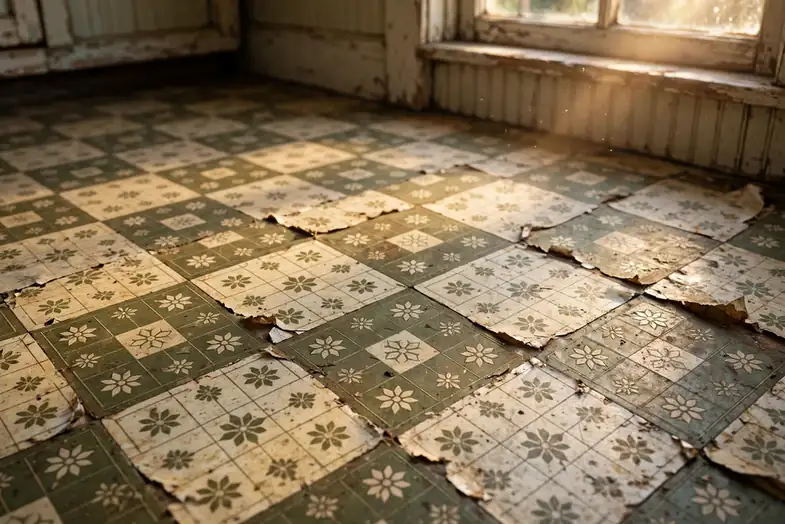
Linoleum is made from natural materials like linseed oil, cork dust, wood flour, and jute. It became popular in the early 1900s and was widely used in kitchens and bathrooms. It’s often mistaken for vinyl, but the two are different. Linoleum is eco-friendly and doesn’t usually contain synthetic materials.
Linoleum vs. Vinyl Flooring: What’s the Difference?
The confusion starts with the name. For decades, many homeowners have called any resilient sheet flooring “linoleum,” but true linoleum and vinyl flooring are different products. True linoleum is made from linseed oil, cork dust, wood flour and jute — all natural materials — and it contains no asbestos. Vinyl flooring, on the other hand, is made from synthetic PVC, and from the 1950s through the 1980s manufacturers often added asbestos to vinyl sheet flooring and vinyl tiles to make them stronger and more fire-resistant. The black adhesive (mastic) used to glue either type of flooring down could also contain asbestos. So when people ask about “asbestos linoleum,” they usually mean a vinyl floor that was sold or installed under the linoleum name. The only way to know which material you have — and whether it or its adhesive contains asbestos — is laboratory testing.
When and Why Asbestos Was Used in Flooring
Asbestos was once used in many building materials, especially from the 1920s to the 1980s. It was cheap, strong, and fire-resistant. Flooring manufacturers added it to products for extra durability and insulation. While real linoleum didn’t typically contain asbestos, some flooring products labeled as linoleum were actually vinyl-based and did contain it. The backing or adhesive used to install flooring may also include asbestos. Asbestos was used in other parts of older homes too, including pipe insulation and vermiculite insulation.
Does Linoleum Contain Asbestos?
Most true linoleum does not have asbestos. However, confusion often comes from vinyl sheet flooring, which looks similar. If your flooring was made between the 1920s and 1980s, especially in the ’50s to ’70s, it’s possible asbestos is present. Even if the linoleum itself is asbestos-free, the adhesive or backing could contain asbestos fibers. Learning what asbestos looks like can help you spot suspect materials, but visual clues alone are never proof — only laboratory testing can confirm it.
Check for these clues:
- Installed before 1980
- Looks like vinyl or sheet flooring
- Brittle or discolored backing
- Unknown manufacturer or no product labeling
Flooring Materials and Asbestos Risk
| Flooring type | Era commonly used | Asbestos risk | What to do |
|---|---|---|---|
| True linoleum (linseed-based) | 1900s–1970s | Low in the material itself — but the adhesive may contain asbestos | Test the adhesive before removal |
| Vinyl sheet flooring | 1950s–1980s | Medium–High | Test before cutting or lifting |
| Vinyl tiles (9″×9″) | 1950s–1980s | High | Test; do not break tiles |
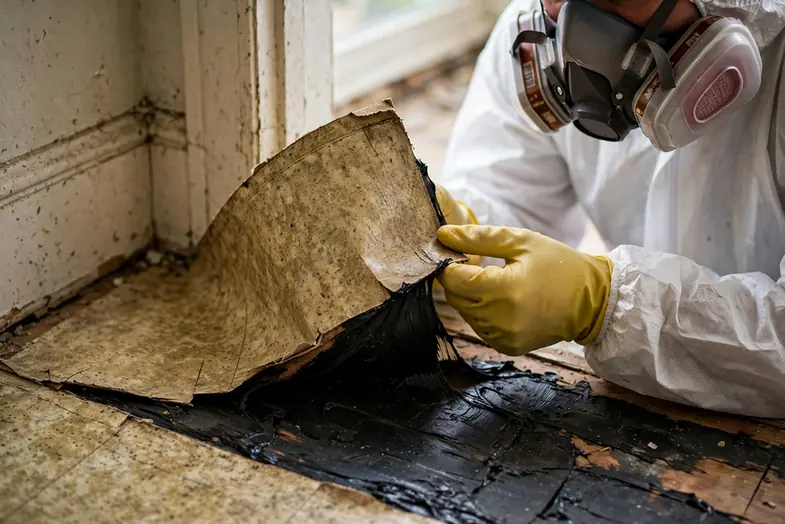
| Black mastic / adhesive | 1950s–1980s | Often contains asbestos | Test; never sand or scrape |
| Modern vinyl / laminate | After 1990 | Very low | Confirm the install date |
How to Identify Asbestos in Flooring
You can’t tell by just looking. The only way to know for sure is to test it. Our guide explains how to test floor tiles for asbestos, including what a professional inspection and lab analysis involve.
Here’s what you should do:
- Do not disturb the flooring. Asbestos is dangerous when airborne.
- Hire a certified asbestos inspector. They will safely take samples.
- Send samples to a certified lab. Testing is affordable and reliable.
Avoid scraping, sanding, or pulling up old flooring on your own. Even a small amount of disturbed asbestos can pose health risks.
How Much Does Asbestos Floor Testing Cost in Vancouver?
Testing usually costs a few hundred dollars, depending on how many samples are taken and whether the lab work is rushed. A single floor sample is cheaper than a full hazardous materials survey of the home. Ask for a written quote that includes sampling, lab fees and the report, and be wary of any quote that seems far below the local range.
What to Do if You Suspect Asbestos
If you think your flooring has asbestos:
- Leave it alone until you confirm it.
- Call a professional to conduct asbestos testing and inspect the flooring.
- Consider encapsulation (sealing it) or professional asbestos removal.
Don’t attempt DIY removal. In BC, asbestos removal must be carried out by a licensed asbestos abatement contractor under WorkSafeBC rules and the BC Occupational Health and Safety Regulation, and improper handling can spread asbestos throughout your home.
Asbestos-Free Flooring Alternatives
If you’re remodeling, choose safe, modern materials.
Here are a few options:
- New linoleum (made with natural materials)
- Luxury vinyl tile (LVT) labeled asbestos-free
- Cork, bamboo, or engineered hardwood
Look for certifications like FloorScore or GreenGuard to ensure the products are low-emission and safe.
Conclusion
If your home has old flooring, it’s smart to ask questions. Linoleum itself usually doesn’t contain asbestos, but similar-looking materials might. If in doubt, get it tested. Your safety and your family’s health come first. Don’t guess—know for sure before you renovate or remove anything.
Need help with asbestos testing or removal? Synchron Demolition specializes in asbestos services in Vancouver, North Vancouver, West Vancouver, and Burnaby. Contact us today for a safe and professional inspection.
Frequently Asked Questions About Asbestos Linoleum
Did all old linoleum contain asbestos?
No. True linoleum is made from linseed oil and contains no asbestos, but many floors people call ‘linoleum’ are actually vinyl sheet flooring or vinyl tiles, which often did contain asbestos — and so did the black adhesive underneath. Only laboratory testing can tell you whether your floor or its adhesive contains asbestos.
What years was asbestos used in flooring in Canada?
Asbestos was widely used in vinyl flooring and adhesives from the 1950s through the 1980s, and its use declined sharply after 1990. Canada banned asbestos in 2018. Flooring installed before the 1980s should be treated as suspect until tested, while flooring installed after 1990 is very unlikely to contain asbestos.
Can I tell by looking whether my floor has asbestos?
No. Asbestos fibres are microscopic, so no visual check can confirm or rule them out. Age, tile size — 9×9-inch tiles are the classic warning sign — and the type of adhesive are useful clues, but look-alike products are common. The only reliable answer comes from laboratory testing of samples taken by a licensed professional.
Is it safe to walk on old vinyl flooring that might contain asbestos?
Yes, as long as the flooring is intact and undisturbed. Asbestos fibres are only released when the material is cut, sanded, broken or torn. Keep the floor in good condition, avoid dragging heavy furniture across it, and do not pull up tiles or sand the adhesive. If the floor is damaged, have it assessed by a licensed professional before doing anything.
Can I remove asbestos flooring myself in BC?
No. In BC, asbestos removal must be carried out by a licensed asbestos abatement contractor under WorkSafeBC rules. Removing flooring yourself can release fibres, expose your family, and lead to stop-work orders or fines. Asbestos waste must also go to an authorized facility — it cannot go in regular garbage or a standard disposal bin.
How much does asbestos floor testing cost in Vancouver?
Testing usually costs a few hundred dollars, depending on how many samples are taken and whether the lab work is rushed. A single floor sample is cheaper than a full hazardous materials survey of the home. Ask for a written quote that includes sampling, lab fees and the report, and be wary of any quote that seems far below the local range.
What should I do before replacing old flooring in a pre-1990 home?
Get the flooring tested first — ideally as part of a hazardous materials survey. Do not pull up tiles, sand the adhesive, or use a heat gun on the floor, since all of these can release fibres. Keep the area undisturbed until the results come back, then hire a licensed abatement contractor if the test is positive.
Sources
- WorkSafeBC — worksafebc.com — BC rules for asbestos testing, removal licensing and waste handling.
- Health Canada — canada.ca — federal guidance on asbestos in older homes.
- US EPA — epa.gov/asbestos — where asbestos is found in flooring and what to do about it.
- CCOHS — ccohs.ca — Canadian guidance on asbestos-containing flooring materials.